Smart home and app control for rooflights
Smart home and app control for rooflights. What it means in practice on Essex housing stock, and how we approach it.
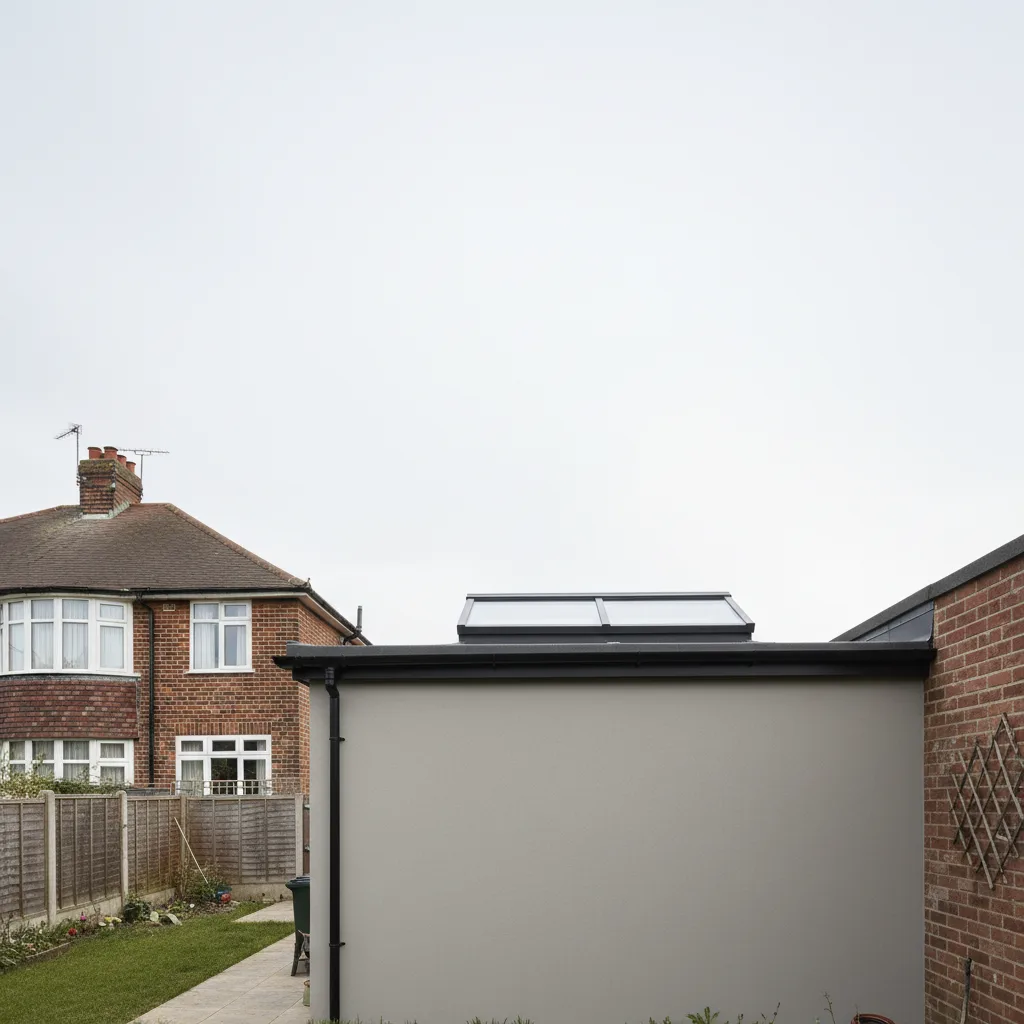
A rooflight sits three metres over your head, which is exactly why the ones worth automating are the ones you cannot easily reach. Smart control is not a gadget bolted onto a window. It is a chain of parts, motor, sensor, controller and app, that decides when the glass opens, how far, and what makes it close again on its own. Get the chain right and a high rooflight airs the room, purges the summer heat overnight and shuts itself the moment rain starts, all without anyone standing under it with a pole.
What “smart” means once you break it into parts
The word gets used loosely, so it helps to separate the layers. Every app-controlled rooflight is built from four things stacked on top of each other, and a fault or a limitation at any layer shows up as the whole system feeling less clever than the brochure promised.
At the bottom is the actuator, the motor that physically moves the sash. On rooflights this is almost always a chain actuator or a spindle drive running on 24 volts direct current, drawing its power either from a mains transformer tucked into the ceiling void or, on some units, from a rechargeable battery pack topped up by a small solar panel on the frame. The actuator is what limits how far the glass can travel and how much force it can push against wind pressure.
Above that is the controller, a small board that tells the actuator to run, stop, or reverse. Then comes the communication layer, the radio or wired protocol that carries the command from your phone or a sensor to that controller. On top of all of it sits the app and, if you want it, the voice assistant. When people say a rooflight is not responding, the fault is usually in the middle two layers, the controller or the radio link, not the motor and not the phone.
A unit can be genuinely motorised without being smart at all. A hard-wired wall switch drives the same actuator perfectly well and never touches an app. Smart begins when the controller can take instructions from a schedule, a sensor or a network rather than only from a human pressing a button.
The control methods, ranked by what they need
There is a ladder of control here, and most homes end up using more than one rung at once. Knowing what each one needs behind the scenes saves you paying for capability you will never wire up.
| Control method | What it needs | Good for | Limit |
|---|---|---|---|
| Manual winding pole | Nothing electrical | Low, reachable units | Useless above about 2.5m |
| Hard-wired wall switch | Cable run to a fused spur | A single fixed position on the wall | No schedule, no sensor, no phone |
| Handheld radio remote | Paired transmitter, no wiring to the switch point | Retro-fits, moving the control around | Line of sight matters, batteries to change |
| App over a gateway | Home Wi-Fi plus a bridge or hub | Control from anywhere, schedules, scenes | Depends on the network staying up |
| Voice assistant | App already working, plus a linked account | Hands-free, “open the kitchen skylight” | Only as reliable as the layer under it |
| Full automation | Sensors feeding rules in a hub | Rain-close, night cooling, away mode | Needs setting up properly once |
The jump that changes daily life is from the third row to the fourth. A remote still needs a person to decide. Once the app sits on a gateway, the rooflight can act on a schedule or a sensor reading, which means it does useful things while the house is empty or everyone is asleep. That is the point at which a motorised rooflight stops being a convenience and starts being part of how the house manages its own temperature.
Rain and wind sensors, the part that has to work
The single feature that makes overhead automation trustworthy is the rain sensor. A small electronic pad, usually mounted on the frame or the flashing, detects the first drops and sends a close command straight to the controller, ahead of any app or schedule. On most systems the glass is travelling within a second or two and fully shut inside roughly thirty to sixty seconds, depending on how far it was open and how quick the actuator is.
This matters more on a rooflight than on any wall window, because a rooflight left open in a shower lets water fall directly onto whatever is under it. In south Essex that is often a knocked-through kitchen and dining space under a flat roof, with a table, flooring and sockets directly below the aperture. The rain sensor is the thing that lets you leave the rooflight cracked open for ventilation all day and not think about the weather. It overrides everything else, which is the correct order of priority.
Wind sensors matter here too. The estuary edge is an exposed place to build, and a gust catching a fully opened sash puts real load through the hinges and the actuator. Better systems either close the unit or limit its opening once wind speed climbs past a set threshold. If you are on the seafront, on the cliff top at Leigh or Westcliff, or anywhere with an open fetch across the water, this is worth specifying rather than treating as optional.
One honest caveat. Rain and wind sensors run on the same power and radio the rest of the system uses. If the actuator loses mains power the sensor cannot close a mains unit, which is one argument for battery-backed or solar-topped units on the highest, least accessible rooflights. Ask how a given system behaves in a power cut before you assume the worst weather and the worst luck will not coincide.
Scheduling, scenes and the summer night purge
A schedule is the plainest form of automation and often the most useful. You tell the app to crack the rooflight open at a set time and close it at another, and it does that every day without being asked. A scene groups several actions under one command, so “morning” might open two rooflights to a ventilation position and lift the blinds, while “away” shuts everything.
The scene worth building in this part of the country is the night purge. On a hot day the fabric of a house soaks up heat and holds it, and a room that felt fine at noon is worst at nine in the evening because the ceiling and walls are still radiating what they absorbed. If you open a high rooflight in the cool of the night, hot air stratified at the top of the room escapes upwards and cooler night air draws in low, flushing the stored heat out of the structure before the next day starts. Set the rooflight to open at eleven and close at five, with the rain sensor watching over it, and the room begins the following morning several degrees lower than it otherwise would.
Some systems take this further with an indoor climate sensor that reads temperature, humidity and carbon dioxide, then opens the rooflight when the air in the room actually needs it rather than on a fixed clock. That is genuinely useful in a bedroom, where carbon dioxide climbs overnight and a timed opening cannot know how many people are sleeping in the room. The rule replaces the guesswork.
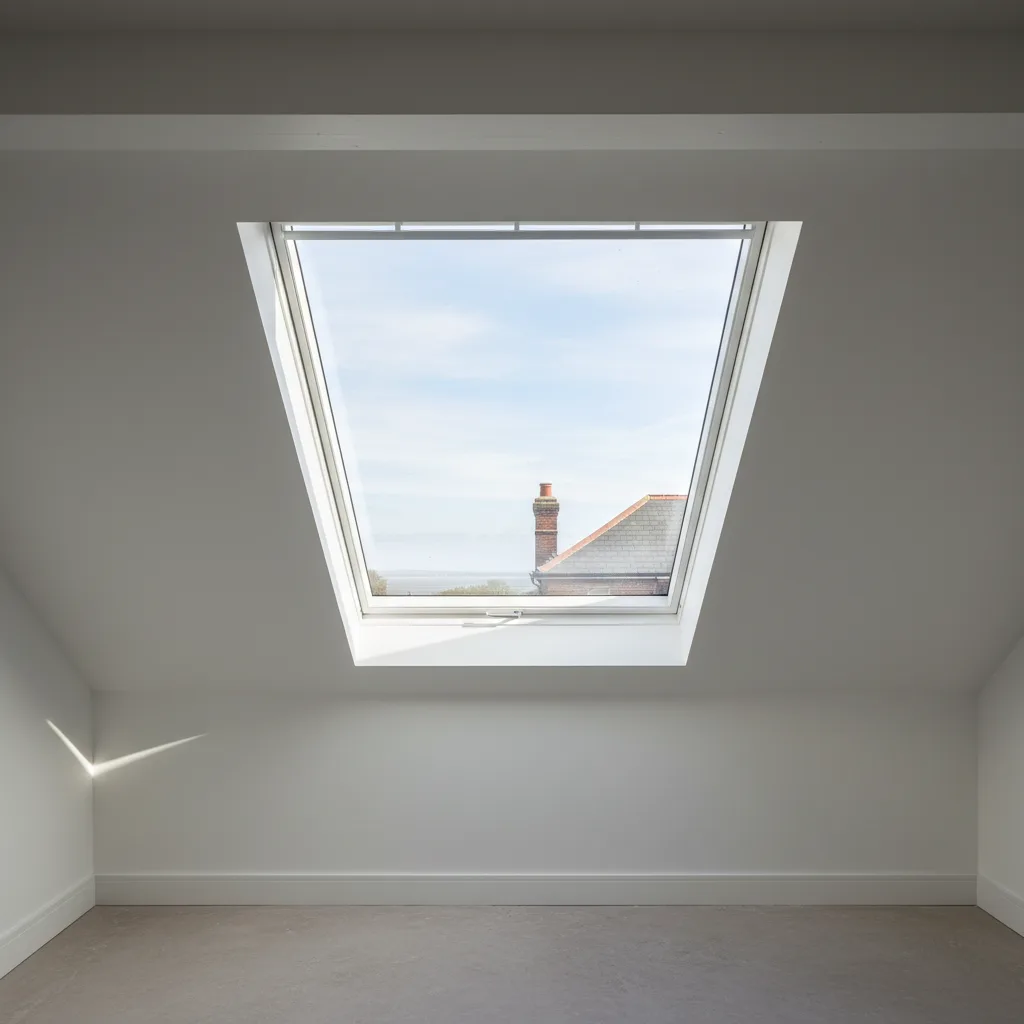
Ventilation is the half of comfort that glass alone cannot deliver. Solar-control glazing decides how much heat arrives through a south-facing rooflight, and it is the number this business argues about first. But once heat is in the room, only moving air removes it, and an opening unit at the highest point of the ceiling clears stratified warm air far faster than any window at head height. This is exactly why an electric opening rooflight earns its keep on a tall room: the glass controls what comes in, the motor controls what goes out, and the schedule makes both happen while you are not thinking about it.
Protocols and ecosystems, and why they are not interchangeable
Underneath the friendly app is a communication protocol, and this is where people get caught out, because a rooflight that speaks one language will not always talk to a hub that speaks another. You do not need to become an engineer, but you should know which family your system belongs to before you buy the second device you want it to work with.
- io-homecontrol is the radio system used by several major rooflight brands, running in the 868 to 870 MHz band in Europe. It is two-way, so the controller confirms the glass actually moved, and it reaches comfortably across a normal house. It is a closed ecosystem: io talks to io.
- KNX is a wired building-automation bus, the choice for a new build or a deep renovation where cabling is going in anyway. It is reliable and vendor-neutral but it is a decision made when the cables go in, not a retro-fit.
- Z-Wave and Zigbee are the general smart-home mesh radios, Z-Wave around 868 MHz in the UK and Zigbee on 2.4 GHz. Some rooflight controllers speak them directly, many reach them only through a bridge.
- Matter, carried over Thread or Wi-Fi, is the newer cross-brand standard meant to end exactly this fragmentation. Support is arriving on newer gateways, but do not assume a unit is Matter-ready unless the data sheet says so.
On top of the protocol sits the ecosystem you actually see: the manufacturer’s own app, and the voice platform it links to, which in most homes is Amazon Alexa, Google Home or Apple Home. A gateway bridges the rooflight’s protocol into one or more of those. The practical rule is to decide which voice ecosystem your house already runs on, then check that the rooflight system publishes a supported bridge into it. Do that before the order, not after, because retro-fixing a mismatch means adding another box and another point of failure.
Blinds, glare and the south-facing problem automation is best at
The most valuable thing you can automate on a south-facing rooflight is often not the opening at all. It is the shade over it. Southend faces south across the Thames Estuary, with an open horizon and reflected light coming up off the water, and a flat rooflight facing straight up collects roughly twice the solar energy per square metre that a vertical south window does at midsummer noon. That is a lot of heat and a lot of glare arriving at ceiling height in the hottest part of the day.
An automated external blind or an internal solar screen, driven by the same controller and the same climate sensor, closes over the glass when the sun is on it and opens again when it moves off. External shading is far more effective than internal, because it stops the energy before it passes the glass, but internal blinds still cut glare on a screen and soften the light. Tie the blind to a light or temperature threshold and the room manages its own glare through the afternoon while nobody is home to reach for a cord.
Automation and glass specification are two halves of the same job, and the right sequence is glass first. A solar-control unit that lets in a low fraction of the sun’s heat while keeping the room bright reduces how hard the shading and the ventilation ever have to work. Getting the solar-control glazing right on the south planes, then automating a blind and an opening sash on top, is a far calmer room than a clear-glazed rooflight relying on its motor to bail it out every July. If you are planning a run of glazing over an extension, a roof lantern or a bank of flat-roof skylights, the automation should be designed around the aspect of each plane, not sprinkled on at the end.
Power, wiring and what to plan before the glass goes in
Almost every regret with a smart rooflight traces back to a decision that should have been made before installation and was left until after. The awkward truth is that the tidiest, most reliable systems are mains powered, and mains power means a cable, and a cable means planning the route while the ceiling is open.
A mains chain actuator runs off a low-voltage transformer that needs a fused spur nearby, usually in the ceiling void or an adjacent cupboard. Running that cable is straightforward during a loft conversion or an extension build when the plasterboard is not yet up, and a real nuisance afterwards. If the room is already finished, a battery-and-solar unit avoids the cable entirely, at the cost of a battery that eventually needs recharging or replacing and a solar panel that wants some daylight to do its job. Neither is wrong. The choice just has to be made deliberately, with the ceiling and the access in front of you.
A short checklist worth settling before anything is fixed in place:
- Where does the power come from, mains spur or battery and solar, and is the cable route accessible now?
- Where will the sensors sit, and does the rain sensor have a clear position on the frame or flashing?
- Which voice ecosystem does the house run, and does the chosen system bridge into it?
- What happens in a power cut, and does that answer suit the height of the unit?
- How far apart are the units, because a radio link has range limits and a large house may need a repeater?
- Who notifies Building Control? A new or enlarged rooflight is notifiable under the Building Regulations, Part L for thermal performance and Part K for the safety glazing overhead, and we make that notification to Southend-on-Sea City Council or the relevant local authority for your address as part of the installation.
None of this is exotic, but all of it is far cheaper to get right on the drawing than to unpick from a finished ceiling.
How to choose, and what to ask whoever is quoting
Bring the conversation back to the four layers and you will not get lost in brand names. Ask what actuator the unit uses and how far it opens, because a rooflight that only cracks 100mm ventilates far less than one that swings to 300. Ask what protocol the controller speaks and which bridge it needs for the voice system you already own. Ask whether the rain and wind sensors are included or extra, and how the unit behaves when the power is off. Ask whether the schedule and scene features live in the manufacturer’s own app or depend on a third-party hub you will have to maintain.
Then step back and ask whether every rooflight in the plan actually needs to be smart. A low unit you can reach with a pole may not justify a motor at all. A high rooflight over a stairwell, or a bank of glazing over a south-facing extension, is where automation pays for itself several times over, in heat purged, glare controlled and rain never let in. Matching the level of control to the height and the aspect of each individual unit is the whole skill, and it is the same discipline as matching the glass to the compass.
We have been installing skylights and rooflights across south Essex for over fifteen years, every installation backed by a ten-year workmanship guarantee, and the motor and the app are always the last decision, not the first. If you want a specification that sets out the glass, the opening and the control layer for each roof plane separately, ask us for one, or talk it through on 01702 898232 before anything is ordered.
Related reading
How does an electric skylight work?
How does an electric skylight work? The short answer, then the detail that actually matters.
Wiring and power for an electric rooflight
Wiring and power for an electric rooflight. What it means in practice on Essex housing stock, and how we approach…
How much does an electric rooflight cost?
How much does an electric rooflight cost? The short answer, then the detail that actually matters.
Rain sensors and automatic closing
Rain sensors and automatic closing. What it means in practice on Essex housing stock, and how we approach it.
Do electric rooflights need an electrician?
Do electric rooflights need an electrician? The short answer, then the detail that actually matters.
Electric rooflights for stack ventilation
Electric rooflights for stack ventilation. What it means in practice on Essex housing stock, and how we approach it.