About Skylights On Sea

Over 15 years installing skylights and rooflights.

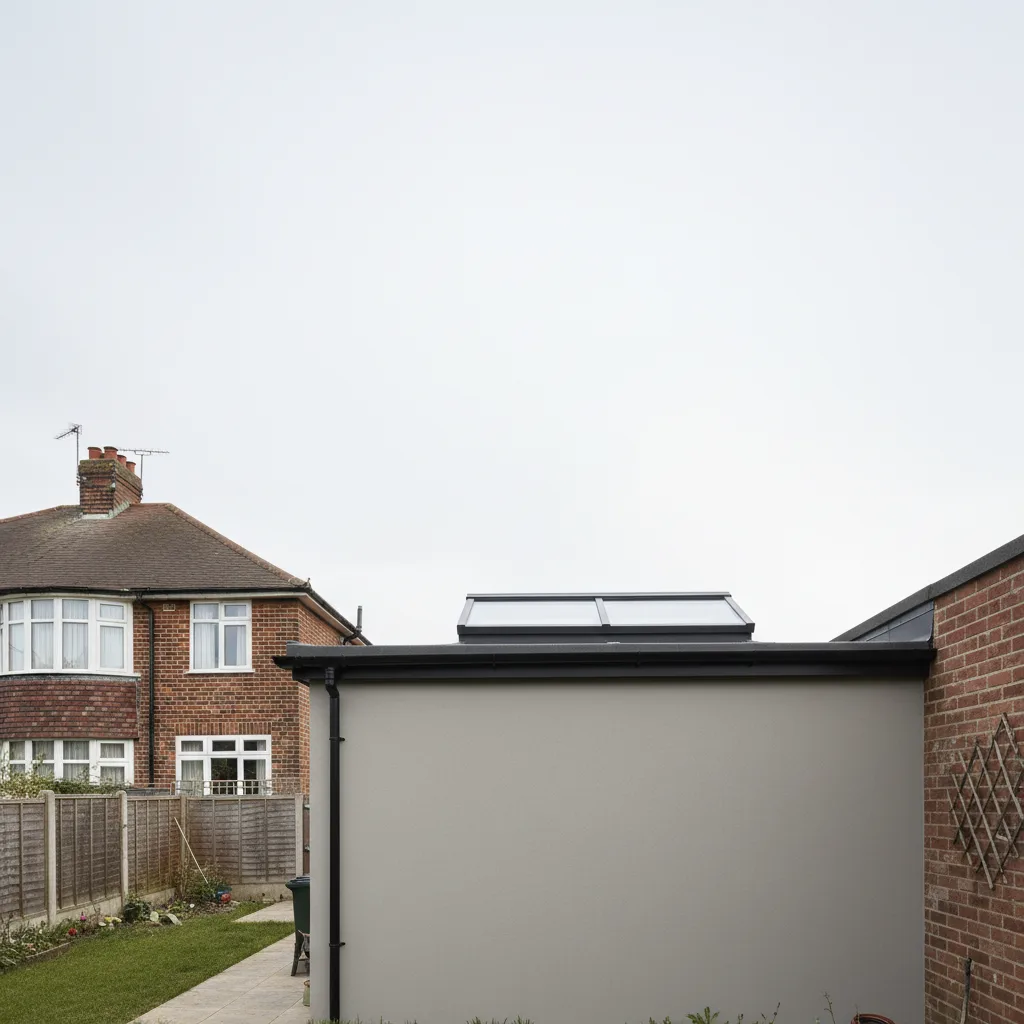
Two installers working on a flat roof extension with a new rooflight kerb built and ready for the unit
The kerb, the covering and the insulation line are where an installation is won or lost. The glass is the easy part.

Skylights On Sea puts skylights, rooflights and roof lanterns into roofs across south Essex. That is the whole business. New installations and replacements, over fifteen years of them, specified around which way your roof plane faces rather than around whatever unit is easiest to order. Every installation carries a ten-year workmanship guarantee, and the Building Control notification is ours to make, not yours.

The work we take, and the work we send elsewhere

We install and we replace. We do not repair. If you have called round already, you will have noticed that is unusual, so it is worth being clear about where the line sits and why we drew it there.

A leak on a rooflight that is otherwise sound is roofing work. The unit is fine, the flashing or the surrounding covering has let go, and what you need is a roofer with a ladder and an hour. That is not us, and pretending otherwise would waste your morning and ours. Ring a local roofer.

A rooflight whose glazing unit has blown, whose frame has gone, or which was never right for the roof plane it sits in, is a different job. Taking that out and putting a properly specified unit back in its place is a replacement, and replacements are our work. So is opening a new aperture in a roof that has never had one.

The reason for the split is not squeamishness about small jobs. Repair work and installation work pull a business in opposite directions. Repairs are reactive, they land at short notice, and they get squeezed into whatever gap exists in the diary. Installations are planned: the survey, the lead time on the glass, the day the scaffold or tower goes up, the day the roof is open. A firm running both has to choose every morning which one gets the good weather. We do not have that choice to make, which means the day we book with you is the day we turn up.

The narrower focus shows in the detail work too. The same handful of junctions decide whether a rooflight performs for twenty years or annoys you for two: the upstand and how it is built, the way the covering is dressed up and over it, the insulation line at the kerb, the fastenings, the finish inside where the reveal meets the plasterboard. Doing those same details week after week is how they stop being a puzzle. You can see the whole range of what we fit on the services page.

Fifteen years of south Essex roofs

Over fifteen years installing across this patch buys you something specific: you stop being surprised by the buildings. South Essex is not one housing stock, it is several sitting side by side, and each one behaves differently once the covering comes off.

The 1930s semi belt runs for miles here, and its rear extensions are the classic skylight job: a flat or shallow-pitched roof over a knocked-through kitchen, rafters at spacings that were never meant to carry a large aperture, and a garden the room was opened up to look at. The Victorian and Edwardian villas along the seafront and up the cliff have deep, steep slopes with purlins in awkward places, and loft conversions that want light without a dormer. Weatherboard and timber-frame cottages in the Rochford and Maldon villages need a lighter touch and often a planning conversation first. Post-war and new-build estates at Shoeburyness and out towards Basildon come with trussed roofs, where cutting anything is a structural decision rather than a carpentry one. The dense Victorian terraces at the Thurrock and Havering edge bring access problems before they bring roofing ones.

Then there is the weather. Roofs within sight of the water take wind loading and salt-laden air that inland roofs do not. It affects fastening choices, it affects which coated finishes hold up, and it affects how an opening unit is set so that it still seals in a February gale off the estuary. None of that is exotic knowledge. It is just the accumulated result of working one coastline rather than a county at random.

Why facing south changes what we specify

Almost every seaside settlement in England looks north, east or west. Southend-on-Sea looks south, straight across the Thames Estuary, and that single accident of geography is the reason this business specifies the way it does.

A south aspect here comes with nothing in the way. No ridge line, no woodland, very little tall development standing between a roof here and the sun’s arc. There is a wide sheet of water to the south throwing reflected light back up at every roof plane along the coast. Put a large area of glass horizontally into a ceiling under those conditions and you have built something that collects heat extremely well, whether or not that was the intention.

So the local problem with rooflights around here is rarely water getting in. It is the July afternoon when the room under the new lantern is the one nobody will sit in. That is a specification problem, and it is solved before anything is ordered, by looking at the compass rather than the catalogue.

Our order of work is orientation first, then glass, then unit. We take the aspect and pitch of each plane on your roof, decide what the glass on that plane has to do, and only then talk about which product delivers it. Two rooflights on the same house can easily need two different glazing build-ups, and a quote that applies one specification to a whole roof has skipped a step. The glazing and solar-control side of it is set out properly elsewhere, with the numbers.

Building Control, and who does the paperwork

A new or enlarged rooflight is notifiable under the Building Regulations. Part L governs the thermal performance of the unit, Part K governs safety glazing overhead and any guarding involved in getting to it. That notification is part of the job we quote, not an extra you chase afterwards. We make it to Southend-on-Sea City Council, or to whichever local authority covers your address.

This matters more than it sounds. The paperwork outlives the installation. When you come to sell, a buyer’s solicitor will ask what happened to the roof, and a properly notified installation answers the question in one line instead of holding up an exchange while somebody applies for regularisation.

Planning permission is a separate question and usually a shorter one. Rooflights on a house are generally permitted development where they project no more than 150mm beyond the roof plane, sit below the ridge, and, on side elevations below 1.7 metres, use obscure glazing with restricted opening. Flats and maisonettes, listed buildings and conservation areas are the exceptions. In Leigh-on-Sea, the Leigh Cliff and Leigh conservation areas carry an Article 4 Direction that removes permitted-development rights for changes to roofing materials and windows, so an application is needed there where it would not be a mile down the road. We will tell you which situation you are in at survey, and we will always say to confirm it with the local authority rather than take a tradesman’s word for a planning position.

The ten-year workmanship guarantee

Every installation we carry out is covered by a ten-year workmanship guarantee. Workmanship is the important word in that sentence, so here is what it means in practice.

A glazing unit comes with a manufacturer’s warranty covering the unit itself: the seal, the coatings, the mechanism if it opens. That is the manufacturer’s responsibility and it stays with them. Our guarantee covers the part that is ours: the aperture, the trimming, the upstand or kerb, how the roof covering is dressed into it, the flashings, the fastenings, the seals we form and the internal finish where the reveal lands.

Ten years is long enough that it changes decisions on the roof. When you know you may be looking at a junction again in eight years, you build it the slow way the first time. Installed to current Building Regulations, notified, and guaranteed for a decade is the same standard on a single pitched-roof window as it is on a run of units over an extension.

No showroom, and why that suits this work

We are a service-area business. There is no showroom and no trade counter, because a skylight is the one product a showroom cannot honestly sell you. What decides your installation is not how a sample frame feels in a heated room. It is your pitch, your rafter or truss layout, your roof build-up, your ceiling height, and above all which way that particular plane faces. All of those are at your address, so that is where the survey happens.

Practically, it means the first proper conversation is on your roof and inside the room underneath it, with measurements taken and the aspect worked out. It also means the money that would otherwise sit in a display space goes into survey time and glass specification instead. We cover south Essex from Southend outwards, and you can see the towns and villages we work in on the areas page.

An installer checking the orientation and pitch of a rear extension roof with the estuary in the distance
Every job starts with the compass. Which way the plane faces decides the glass long before anyone picks a unit.

If you want a specification for your own roof, with the U-value and the G-value written down for each plane separately, ask us for a quote or ring 01702 898232. If you are still working out whether the job you have in mind is an installation at all, say so on the phone and we will tell you straight, including when the answer is that you need somebody else.

Get a fixed quote

Get a fixed quote

Tell us which way your roof faces.

We will come back with a specification, not a catalogue page. If your extension faces south we will tell you the G-value we would fit and why.

  • No pressure, no doorstep sales call
  • We handle the Building Control notification
  • 10-year workmanship guarantee on every installation
  • Installations and replacements across Southend and south Essex

Prefer to talk it through? 01702 898232