Chain, spindle and linear actuators compared
Chain, spindle and linear actuators compared. What it means in practice on Essex housing stock, and how we approach it.
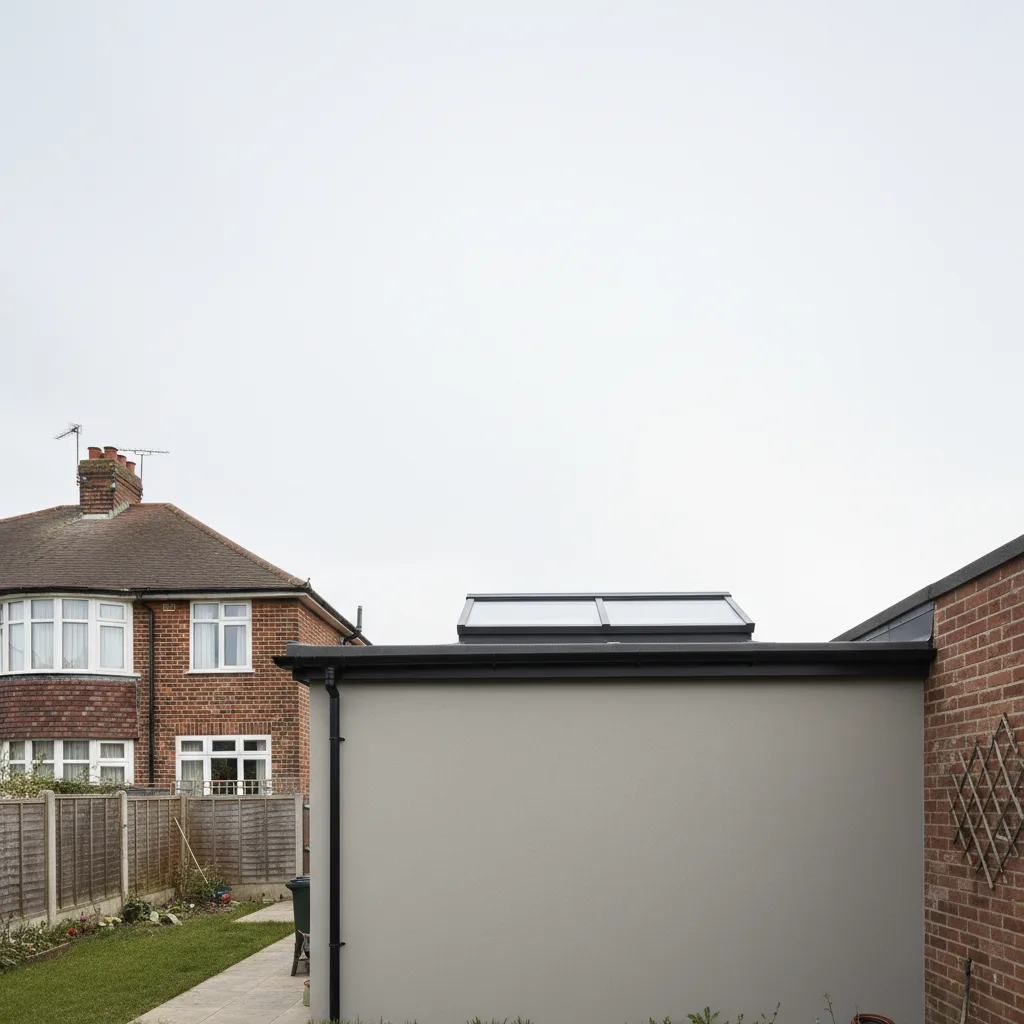
An opening rooflight is only as good as the small motor that pushes it. Three mechanisms do that job, and they are not interchangeable. A chain actuator, a spindle actuator and a linear actuator each push with a different force, over a different distance, at a different speed, and each suits a different weight of glass on a different pitch of roof. Get the pairing wrong and the sash either strains the motor and fails early, or it opens a token crack and never clears the hot air you fitted it to shift. This page sets the three side by side.
What the actuator is actually being asked to do
An electric rooflight has a fixed frame built into the roof and a moving sash that carries the glass. The actuator sits between the two. When you press the switch it extends, levers the sash up off its seals and holds it open against its own weight, against gravity pulling it back down the pitch, and against whatever the wind is doing to it. When you close it, it pulls the sash back down and compresses the weather seals hard enough to keep rain out.
Three demands decide which mechanism is right. The first is force, measured in newtons, because a large sheet of double glazing in an aluminium frame is heavy and the actuator has to lift its share of that weight at an angle. The second is stroke, the distance the mechanism travels from fully shut to fully open, measured in millimetres, because a rooflight that opens 100mm ventilates very differently from one that opens 400mm. The third is holding, whether the mechanism can sit at a chosen position and stay there without drifting, and whether it resists being pushed back by wind trying to force the sash shut or suck it open.
Everything below comes back to those three. A mechanism strong on one is often weak on another, which is the whole reason there is more than one design on the market.
Chain actuators: the light, fast, common one
A chain actuator holds a rigid chain coiled inside a slim case fixed to the frame. The chain is made so its links can bend one way to coil up but lock straight when they run out, so the motor can push the chain out like a solid rod and it will not buckle. The free end pushes against the sash and swings it open. Reverse the motor and the chain coils back into the case and pulls the sash shut.
The case is thin, often under 30mm deep, so it tucks into the frame and is barely visible once the rooflight is shut. That slimness is the main reason chain actuators are the default on domestic roof windows and on most flat-glass rooflights you will find fitted over a kitchen or a loft room. They are quick, clearing a full stroke in something like twenty to forty seconds, and the running noise is a soft whir rather than a grind.
The trade is force and stroke. A single chain typically pushes in the region of 200 to 350 newtons, which is plenty for a standard roof window but not for a large heavy lantern. Stroke is usually adjustable on installation, commonly between about 100 and 400mm, so you can set how far the unit opens. On a wide sash a single chain pushing from one point can rack the frame, twisting it out of square, so wider units use a twin-chain or dual-chain actuator that pushes from two points at once and keeps the sash lifting evenly.
Chain actuators do not naturally lock. The motor and gearbox hold the chain against back-drive, which is enough for weather but is not a security bolt. On accessible ground-floor or side-return rooflights that matters, and it is one reason a heavy secure unit is often better served by the next type.
Spindle actuators: slow, strong and self-locking
A spindle actuator, also called a screw actuator, works like a worm drive. The motor turns a threaded rod, and a nut travelling along that thread pushes an arm against the sash. Because the movement comes from a fine screw thread rather than a coiled chain, two things change. The push is much stronger, commonly 300 to 1,000 newtons depending on the model, so a spindle mechanism will move a heavy pane a chain would strain against. And the thread is self-locking: once the motor stops, the sash cannot push the nut back down the thread, so the unit holds exactly where it stopped and resists anyone trying to lever it open from outside.
That self-locking behaviour is the reason spindle actuators are favoured on heavier units and where a bit of security is wanted. It is also why they hold an intermediate position so reliably, which is useful if you want the rooflight cracked open a set amount overnight and left there.
The cost of the strong fine thread is speed. A spindle actuator moves slowly, often only five to eight millimetres a second, so a full opening cycle can take the better part of a minute or more. It is quieter than a chain under load and the mechanism is compact, but the arm and its fixing usually sit more proudly on the frame than a slim chain case does. Stroke tends to be shorter than a chain, frequently in the 100 to 400mm band, and long strokes are not the spindle’s strength.
Linear actuators: long reach and heavy lifting
A linear actuator is a telescopic rod, sometimes called a ram or a rod-and-tube actuator. Inside the outer tube a spindle or a rack drives an inner rod straight out and straight back. Because the rod extends in a clean line rather than swinging on a short chain, a linear actuator gives the longest stroke of the three, often up to 600mm and beyond on larger models, and it does it with high force, commonly 1,000 newtons and upwards.
That combination of long reach and heavy push is why linear actuators are the mechanism of choice on large roof lanterns, on wide flat-roof openings and on smoke and heat ventilators, the automatic opening vents that have to fling a heavy panel wide in seconds to clear a stairwell. On a domestic roof lantern where the opening leaf is large and heavy, a pair of linear or spindle actuators working together is often the honest answer, where a chain would be working at the edge of its rating.
The downside is bulk and prominence. A linear actuator is a visible rod when the unit is open, and even shut it is a more substantial fitting than a slim chain case. On a big opening it is rarely fitted singly: two actuators are synchronised so they extend together and keep a wide leaf lifting evenly without twisting. Long strokes also want somewhere to go, so the geometry of the reveal and the ceiling opening has to allow the sash to swing that far without fouling anything.
The three compared, with typical figures
These are industry-typical ranges for the three mechanism types on residential and light commercial rooflights. Exact figures vary by manufacturer, by model and by whether a unit is mains or low-voltage, so read them as the shape of each design rather than a fixed specification. What matters is the pattern down each column.
| Property | Chain actuator | Spindle actuator | Linear actuator |
|---|---|---|---|
| Push force (typical) | 200 to 350 N | 300 to 1,000 N | 1,000 N and up |
| Stroke (opening distance) | 100 to 400 mm | 100 to 400 mm | up to 600 mm and beyond |
| Speed of travel | fast, 8 to 14 mm/s | slow, 5 to 8 mm/s | moderate |
| Full cycle time | around 20 to 40 s | up to a minute or more | seconds on vents, longer on large leaves |
| Holds a set position | held by the motor only | yes, self-locking thread | yes on spindle types |
| Resists forced opening | weak | strong | strong |
| Visual footprint | slim, near hidden when shut | compact, arm sits proud | bulky, visible rod when open |
| Best suited to | standard roof windows, flat-glass units | heavy sashes, security, held positions | large lanterns, wide flat units, smoke vents |
| Relative cost | lowest | middle | highest |
Read the force row and the ranking is clear: chain lightest, spindle in the middle, linear heaviest. Read the visual-footprint row and it runs the other way, because the slim, near-invisible chain case is the one people want on a domestic roof and the substantial rod is the one they least want on show. Most of the choosing happens in the tension between those two rows. You are picking the lightest mechanism that will confidently move the weight you have, no lighter.
Matching the actuator to the rooflight
The pairing is driven by four things about the unit and the roof, not by preference.
Weight and size of the sash
Glass weight climbs fast with area. Double glazing runs to roughly 25 kilograms per square metre, so a one metre square opening leaf is around 25 kilograms of glass before you add the frame, and a large lantern leaf can be two or three times that. A single chain is comfortable on the smaller sashes and out of its depth on the large ones, which is where twin chains, spindles or paired linear actuators come in. The manufacturer publishes a maximum sash weight and size for each actuator, and staying inside it is the difference between a mechanism that lasts and one that burns out.
Pitch of the roof
On a steep pitch, gravity pulls the open sash back down towards shut, so the actuator has to hold against that pull all the time it is open, and the force needed to hold and to close goes up. On a flat or shallow roof the sash weight bears more straight down onto the mechanism as it lifts. The required force is a function of both weight and angle, which is why the same glass wants a stronger mechanism on some roofs than others.
How far it needs to open
If the point of the rooflight is background trickle ventilation, a short stroke is fine and a chain does it neatly. If the point is to dump a large volume of hot air quickly out of a room that overheats, you want a long stroke, and that pushes you towards a linear actuator or a spindle with generous travel. Decide what the opening is for before you decide what opens it.
Single or multiple actuators
Anything wider than roughly a metre across the opening edge is a candidate for two synchronised actuators rather than one. Two mechanisms pushing together lift the leaf evenly and stop it racking, which protects the seals and the hinges over years of cycling. Synchronised pairs need a controller that drives them in step, so this is a wiring decision as much as a mechanical one.
Control, sensors and wiring
Most opening rooflights run on low voltage, commonly 24 volt direct current from a transformer, rather than on mains at the sash. Low voltage is safer to run to a wet opening in a roof and it is what synchronised multi-actuator controllers are built around. Some standalone units run on 230 volt mains through a sealed motor. Either way the wiring is planned before the ceiling closes up, because retrofitting a cable to a rooflight after the plasterboard is on is a genuinely awkward job.
Two sensor additions earn their keep on an opening rooflight, and both bear on comfort rather than mechanism choice. A rain sensor closes the unit automatically when it detects the first drops, which matters most on the fast chain units people leave open and forget. A wind or overheat control can open a rooflight automatically once the room passes a set temperature, which turns the opening from something you operate into something that manages the room for you. On a heat-driven install the sensor is doing the real work and the actuator is just the muscle.
Remote and app control, wall switches, integration with a home system and timed schedules are all layered on at the controller. None of that changes which of the three mechanisms is under the glass, but it does change how hard the mechanism gets worked. A rooflight set to open every warm afternoon on a schedule cycles far more than one opened by hand a few times a week, and that duty argues for a mechanism comfortably inside its rating rather than at the edge of it.
Why opening matters most on a south-facing Southend roof
The reason to power a rooflight at all, on this stretch of coast, is usually heat. Southend faces south across the Thames Estuary, and the rear extensions and loft rooms across the south Essex housing stock sit under roofs that collect solar energy through more hours than most. A 1930s semi with a knocked-through kitchen under a flat or shallow roof, with a south-facing garden, gathers heat all afternoon, and that heat rises and sits against the ceiling exactly where a rooflight is. An opening unit at the top of the room clears that stratified hot layer far faster than any window at head height can, because it lets the hottest air leave from the highest point.
That is where the mechanism choice meets the physics. If the rooflight is there to shift a build-up of afternoon heat out of a room that genuinely overheats, a token 100mm crack from an underpowered actuator will not do it, and you want stroke and force to open the unit properly. Glass specification and opening work together on these roofs: solar-control glazing cuts how much heat arrives through the glass in the first place, and the actuator clears what does get in and what the room generates on its own. Glass controls what comes in through the roof. The opening controls what leaves. On a south-facing room you want both pulling the same way, which is the thinking behind every electric opening installation we survey. On a large flat-roof opening over one of those extensions, that usually means a longer-stroke mechanism than a builder reaching for the cheapest chain would fit.
What to ask before you buy
You can settle the mechanism in a short conversation with whoever is quoting, if you ask the right things.
- “What does the opening leaf weigh, and what is the actuator rated to lift?” The rated maximum sash weight should sit comfortably above the actual glass and frame weight, not right on the line.
- “What stroke will it open to?” Tie the answer to why the rooflight is opening. Background ventilation wants little. Clearing afternoon heat from an overheating room wants a lot.
- “One actuator or two?” On anything wide, two synchronised mechanisms protect the seals and the hinges over the years. One motor straining a wide leaf shows up as a worn seal and a draught a few winters later.
- “Does it hold a set position and resist being forced?” If the unit is reachable from outside or you want it cracked overnight, the self-locking spindle behaviour is worth the slower speed.
- “Is there a rain sensor, and what closes it if I am out?” A fast chain unit left open in an Essex shower is a wet floor. The sensor is cheap insurance.
- “Is the wiring planned before the ceiling closes?” Low-voltage cabling to the sash goes in early. Answered late, it becomes a problem.
The three mechanisms are not ranked good to bad. A chain actuator on a standard roof window is exactly right and a linear actuator there would be overkill you could see across the room. The skill is reading the weight, the pitch, the stroke you actually need and the room the rooflight serves, and fitting the lightest mechanism that does that job without complaint. If you want that worked out for your own roof, with the sash weight and the opening distance sized properly against the mechanism, ask us for a specification and we will set it out for each unit.
Related reading
How does an electric skylight work?
How does an electric skylight work? The short answer, then the detail that actually matters.
Wiring and power for an electric rooflight
Wiring and power for an electric rooflight. What it means in practice on Essex housing stock, and how we approach…
How much does an electric rooflight cost?
How much does an electric rooflight cost? The short answer, then the detail that actually matters.
Rain sensors and automatic closing
Rain sensors and automatic closing. What it means in practice on Essex housing stock, and how we approach it.
Do electric rooflights need an electrician?
Do electric rooflights need an electrician? The short answer, then the detail that actually matters.
Electric rooflights for stack ventilation
Electric rooflights for stack ventilation. What it means in practice on Essex housing stock, and how we approach it.