How often should industrial rooflights be replaced?
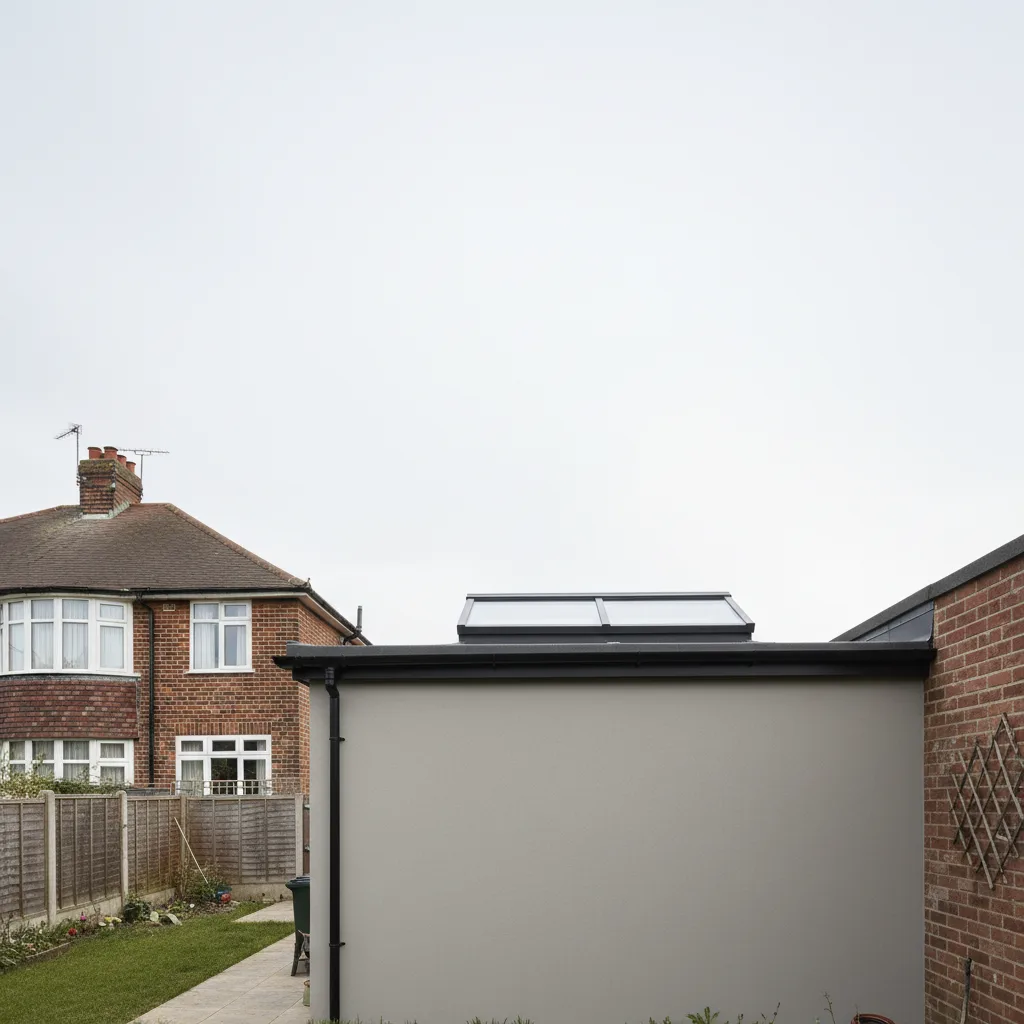
Most industrial rooflights are due for replacement every 20 to 25 years, and a good many need doing sooner. Both GRP and polycarbonate cloud over and turn brittle under years of ultraviolet, so they usually reach the end of their working life well before the metal sheeting around them does, which is why a warehouse or factory roof often lets in far less daylight than it did when it was new without anyone quite noticing the year it changed.
How long each material actually lasts
The honest answer depends far more on what the rooflight is made from than on any single figure. Almost all translucent sheeting on commercial and industrial roofs is one of two materials, and they age differently.
Glass reinforced polyester, usually shortened to GRP, is the corrugated translucent sheet you see running down warehouse and factory roofs in line with the steel cladding. A GRP sheet made with a good protective surface film is generally specified with a 25-year design life. One made without that film, or with a thin gel coat, tends to start breaking down inside 10 to 15 years as the resin at the surface erodes and the glass fibres beneath begin to show through.
Polycarbonate, whether profiled single-skin or multiwall, is far tougher against impact and is often supplied with a 10-year guarantee against yellowing. The better sheets hold up well. Older ones, and cheaper ones without an ultraviolet-protective layer, go amber and lose light transmission steadily. Plain or wired glass rooflights in older mill and industrial buildings can stay optically clear for decades, but they carry their own safety questions that matter more than clarity, which the section below covers.
The signs yours are past it
You rarely get a clean failure with an industrial rooflight. It fades out of usefulness gradually, and there are five things worth looking for.
- Fibre bloom. On GRP, a chalky white surface where the resin has worn away and the glass fibres are exposed. It is the single clearest sign the sheet is on borrowed time.
- Yellowing or browning. Common on older polycarbonate. The sheet still passes some light but the daylight below turns dull and slightly discoloured.
- Crazing and star cracks. Fine surface cracking that scatters light and holds dirt. It gets worse quickly once it starts.
- A drop in daylight. If the lights are going on earlier in the working day than they used to, the rooflights are very often the reason.
- Brittleness. An aged sheet that flexes and creaks, or that has already been over-boarded from below, has lost its strength. This is the one that stops being a daylight question and becomes a safety one.
Fragility is the reason not to wait
The strongest argument for replacing industrial rooflights on a schedule has nothing to do with daylight. Falls through fragile rooflights and fragile roof surfaces are one of the biggest single causes of death and serious injury in roof work, and the Health and Safety Executive treats every aged rooflight as fragile until proven otherwise.
A GRP or polycarbonate sheet that was strong when it was fitted does not stay that way. Ultraviolet, thermal movement and simple age take the strength out of it, so a panel that would once have held a person can crack under a dropped tool or the weight of a maintenance worker who steps on it in poor light. Anyone going onto the roof for gutter clearance, plant servicing or a survey is at risk from sheeting they cannot tell apart from the sound cladding around it.
New rooflights can be specified as non-fragile, tested to the drop-test classification in ACR[M]001 so they will carry the load of a person and their tools without giving way. Replacing tired sheeting with a non-fragile equivalent is a straightforward improvement to how safe the roof is to work on, and swapping a failed panel for a new one is a replacement of the whole unit, so it is squarely the sort of work we do. If the metal roof deck itself is failing around the rooflights, that is a roofing contractor’s job, and the two are usually best planned together.
South-facing roofs and the solar gain question
Replacement is also the one moment when you can change what the glass, or the sheet, actually does. The old sawtooth factory roofs were glazed to the north on purpose, so the workshop got even daylight without direct sun, glare or the heat that comes with it. A great deal of modern industrial and commercial building lost that logic, and mono-pitch or near-flat roofs facing south now pour solar gain straight into the space below.
That matters more here than almost anywhere. Southend-on-Sea faces south across the Thames Estuary, so commercial units on the seafront and on the industrial estates behind it collect sun across the whole working day, and reflected light off the water adds to it. A run of clear rooflights over a south-facing warehouse or a shopfront back office turns into a solar collector over a space that is already warm from people and machinery. When you replace, you can specify the solar factor, the G-value, rather than just the clarity, and cut the summer heat without going dark. That is the whole basis of how we approach a commercial skylight installation, and it runs through our energy-efficient skylight installation work too. The same reasoning applies over a flat roof skylight, where horizontal glazing sees the high summer sun almost square on and orientation gives you no help at all.
What to do next
Start with a look at the roof, or arrange for someone to do it safely, and note three things: what the rooflights are made from, whether the surface shows bloom, yellowing or crazing, and how sound they feel. Treat any sheet that feels brittle or that has been boarded over from below as a priority, because that is a safety matter rather than a daylight one.
If the sheeting is more than about 20 years old, or the daylight below has clearly dropped, plan the replacement to coincide with the next roof recover so the work is done once. Tell us the roof type, the rough number and size of the openings and which way the building faces, and we will come back with a specification and a price. Ring 01702 898232 or request a quote, and we will look at what the roof needs to do rather than just what is in the holes now. Our skylight installation costs page sets out where the figures tend to land.
Related reading
Non-fragile rooflights and roof safety
Non-fragile rooflights and roof safety. What it means in practice on Essex housing stock, and how we approach it.
What is a non-fragile rooflight?
What is a non-fragile rooflight? The short answer, then the detail that actually matters.
GRP rooflight replacement on an industrial roof
GRP rooflight replacement on an industrial roof. What it means in practice on Essex housing stock, and how we approach…
How much does commercial rooflight replacement cost?
How much does commercial rooflight replacement cost? The short answer, then the detail that actually matters.
Barrel vault and northlight rooflights
Barrel vault and northlight rooflights. What it means in practice on Essex housing stock, and how we approach it.
Can rooflights be replaced without stripping the roof?
Can rooflights be replaced without stripping the roof? The short answer, then the detail that actually matters.