Why do GRP rooflights go yellow?
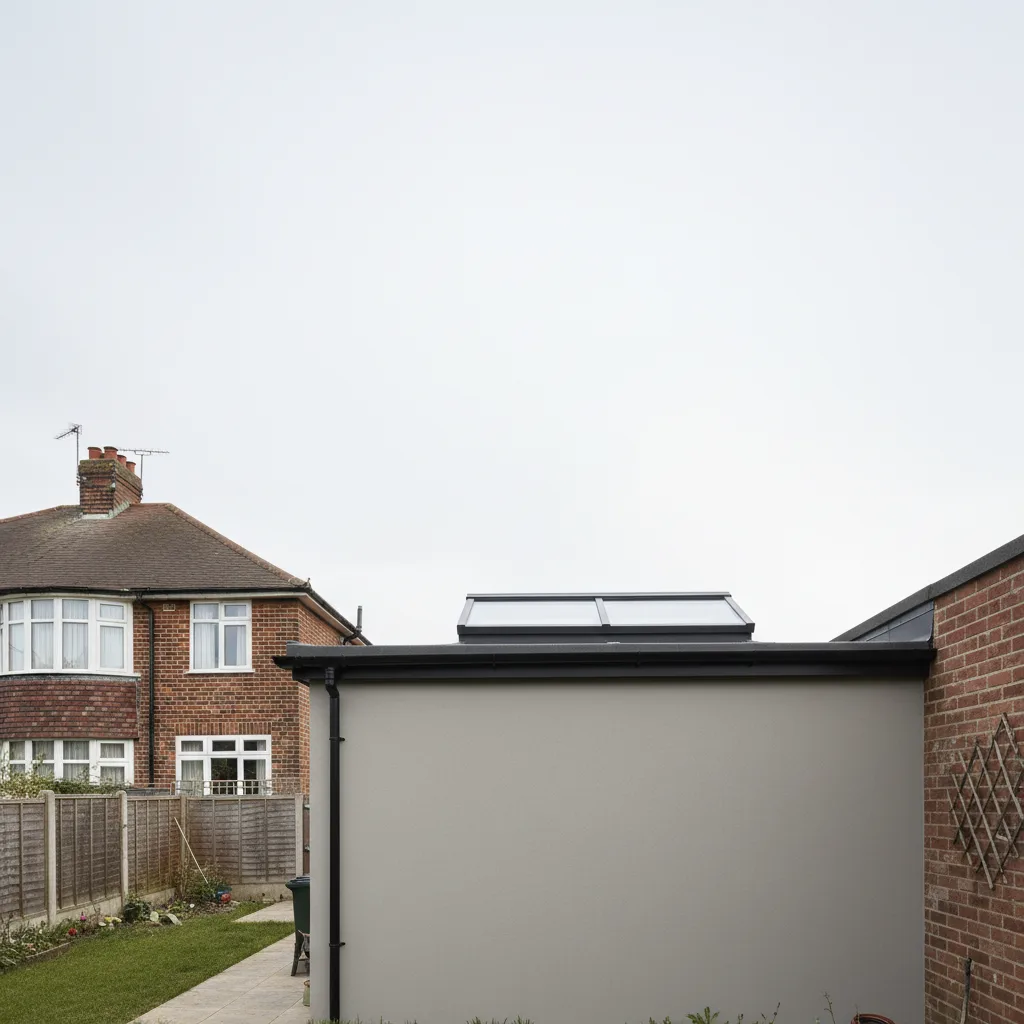
GRP rooflights go yellow because ultraviolet light steadily breaks down the polyester resin that binds the glass fibres together, and the breakdown products absorb blue light, so the panel reads first straw, then amber, then brown. It is a chemical ageing of the plastic itself, not a film of dirt, which is why washing it makes no difference and why the panel facing the most sun always discolours first.
The resin is what breaks down, not the glass
GRP stands for glass reinforced plastic, and the name hides where the trouble sits. A GRP rooflight sheet is a mat of fine glass fibres set in a clear polyester resin, usually with a thin resin-rich surface layer on the weather side. The glass fibres themselves are close to immortal. The resin around them is not.
Polyester resin is held together by chemical bonds that ultraviolet light has just enough energy to break. Once a bond snaps, the loose ends react with oxygen from the air, and that reaction leaves behind molecules called chromophores. A chromophore is simply a fragment that absorbs some wavelengths of visible light and reflects the rest. The ones formed as polyester ages happen to soak up blue and violet light and let yellow and red through, so the human eye reads the panel as yellow. The longer the process runs, the more of them there are, and the colour deepens towards brown.
This is why the discolouration is even across the whole panel rather than streaky the way dirt is, and why it is worst on the upper face that meets the sky. It also explains a second symptom that often arrives alongside the colour. As the surface resin erodes, the glass fibres just beneath it stop being covered and start to show as a whitish, hairy texture. Installers call that fibre bloom. A panel that is both yellowing and blooming has lost its weather layer and is letting water sit against bare fibre, which is the point at which the sheet is genuinely past its service life.
Ultraviolet is the driver, so the sunniest roofs go first
Because the reaction is powered by ultraviolet, the dose of sunlight a roof receives sets the pace. A GRP rooflight on a north-facing garage that only ever catches diffuse sky light can stay reasonably clear for many years. The same sheet on a south-facing roof, in full sun from mid-morning to late afternoon, ages far faster for a simple reason: it is collecting several times the ultraviolet over the same period.
That matters more here than in most places. Southend-on-Sea faces south across the Thames Estuary, which is unusual for an English seaside city, and it leaves a great many rear extensions, garages and workshop roofs pointing straight at the midday sun with an open southern horizon and no tree line or terrace to shade them. Reflected light off the water adds to the total on a bright day. A GRP panel on one of those roofs is sitting in close to the harshest ultraviolet exposure the local building stock offers, so it yellows quickly and it does so unevenly across a roof if part of it falls into shade for some of the day.
Heat plays a supporting role. GRP has no meaningful solar control, so a yellowing rooflight is usually also the reason a room or unit below runs hot in summer. The colour change and the overheating share a cause, which is a south-facing sheet of thin plastic taking the full solar load with nothing in it to reject the heat.
What the yellowing does to the room below
The obvious effect is colour. Daylight coming through a yellowed panel arrives with a warm cast, so white walls read cream and the whole space feels dingier than the amount of light would suggest. As the resin darkens further, the panel also transmits less light overall, so a rooflight that once lit a workshop or a kitchen well ends up doing half the job.
There is a subtler effect that matters on a bright estuary day. A hazy, degraded surface scatters light rather than passing it cleanly, which can raise glare even as the useful daylight drops. You end up with a panel that is both dimmer and harder to look towards. Glare, solar gain and the quality of the light are the three things this business is built around, and a tired GRP rooflight manages to get all three wrong at once: it hands you a colour cast, it does nothing to hold back summer heat, and it scatters the light it does let through.
A modern replacement flips each of those. Clear glazing holds its colour because the coatings and interlayers are stable under ultraviolet in a way that bare polyester is not. And on a south-facing roof you can specify the glass to reject heat while keeping the light clean, which is the point of choosing a G-value to suit the orientation rather than accepting whatever a plastic sheet happens to pass. Our solar-control glazing work exists for exactly that south-facing overheating problem.
Yellowing, bloom and crazing: reading the stage yours is at
Yellowing rarely arrives on its own, and the other symptoms tell you how far the panel has gone.
- Even amber colour, surface still smooth. Early ageing. The resin is discolouring but the weather layer is intact. The light quality has dropped but the sheet is still keeping water out.
- Colour plus a dull, chalky feel. The surface resin is eroding and the panel is losing its sheen. Rain will start to find the fibres before long.
- Whitish, hairy patches. Fibre bloom. The resin over the glass mat has worn through and bare fibre is exposed. Water now wicks into the sheet.
- Fine cracking or crazing. The resin has become brittle with age and is splitting. Crazed panels leak and they are weak underfoot, which is a real safety point on any roof someone might step onto.
One useful test separates ageing from dirt in a moment. Clean a small area and let it dry. Grime lifts and the patch goes clear again. A yellowed panel stays exactly the same colour after cleaning, because the change is in the plastic and not on it.
What to do about a yellowed GRP rooflight
Yellowing cannot be reversed. There is no coating or polish that puts the broken resin bonds back, so once a panel has turned there are only two honest options: leave it and accept the poorer light, or replace the unit. If the panel has reached bloom or crazing, replacement is the sensible route, because a sheet letting water into bare fibre will not improve on its own.
GRP rooflights are most common on commercial and industrial roofs, on garages and on older lean-to extensions, and swapping a run of tired plastic for glazed rooflights that hold their clarity is straightforward work on those buildings. That is our territory: our commercial skylight installation service covers exactly this kind of replacement, and because a new or enlarged rooflight is notifiable under Building Regulations for thermal performance and safety glazing, we make the Building Control notification to the local authority on your behalf as part of the job. If yours is a domestic garage or extension, the same applies at a smaller scale.
One thing to sort out first is orientation. Note which way the roof faces and how much of the day it sits in direct sun, because on a south-facing roof the replacement is your one chance to fix the heat as well as the colour by choosing the right glass. Tell us the roof aspect and the rough size of the opening and we will come back with a specification and a price. Ring 01702 898232 or request a quote, and we will look at the whole roof rather than just the panel that has gone amber.
Related reading
Non-fragile rooflights and roof safety
Non-fragile rooflights and roof safety. What it means in practice on Essex housing stock, and how we approach it.
What is a non-fragile rooflight?
What is a non-fragile rooflight? The short answer, then the detail that actually matters.
GRP rooflight replacement on an industrial roof
GRP rooflight replacement on an industrial roof. What it means in practice on Essex housing stock, and how we approach…
How much does commercial rooflight replacement cost?
How much does commercial rooflight replacement cost? The short answer, then the detail that actually matters.
Barrel vault and northlight rooflights
Barrel vault and northlight rooflights. What it means in practice on Essex housing stock, and how we approach it.
How often should industrial rooflights be replaced?
How often should industrial rooflights be replaced? The short answer, then the detail that actually matters.