How long does a commercial rooflight job take?
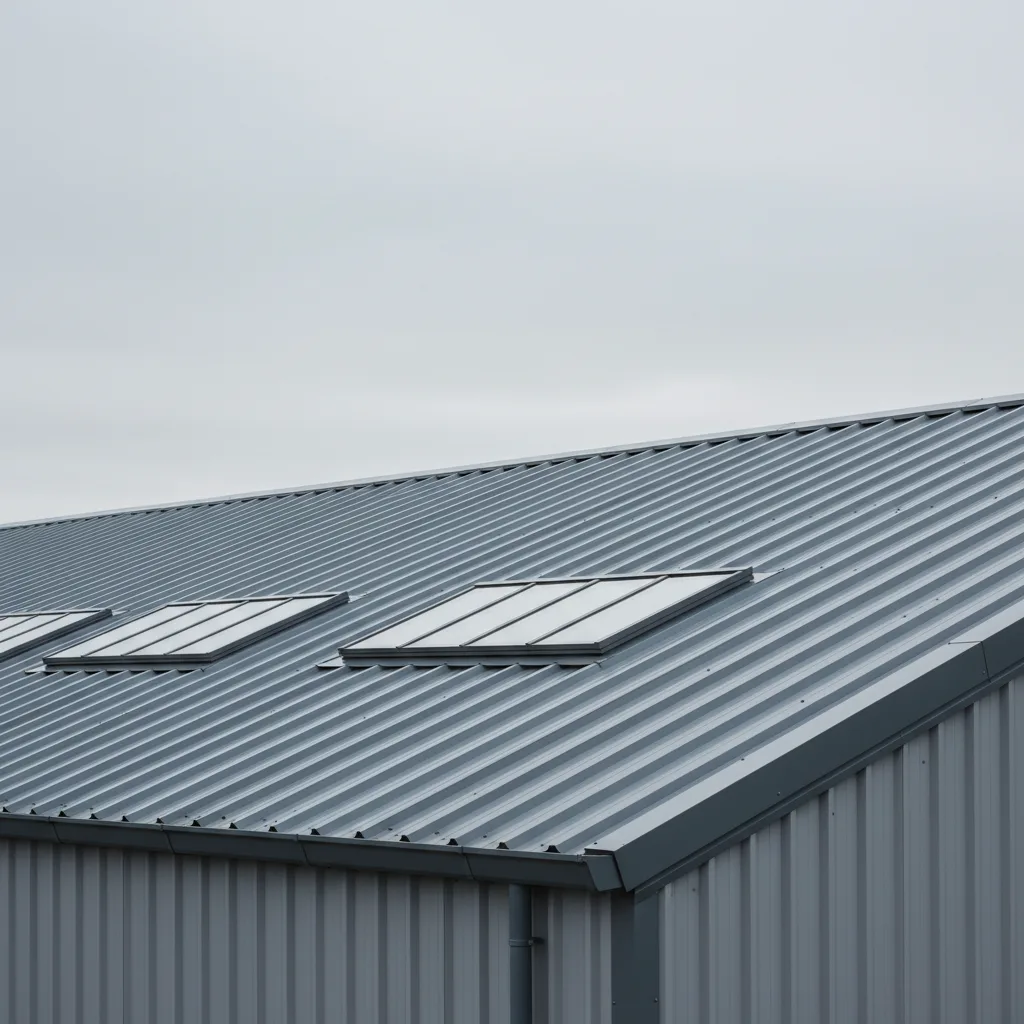
A single commercial rooflight swapped out in an easy-to-reach position is usually a one to two day job on site. A full roof of new rooflights, a run of continuous barrel vaults or anything needing scaffold, edge protection and out-of-hours working stretches to somewhere between one and three weeks, and the manufacture lead time before any of that starts is often the longest single item in the whole programme.
The range, broken down by what you are actually having done
Commercial rooflight work covers a wide spread, so a single figure is close to useless. It helps to split it by the scale of the job, because each step up adds a different kind of time.
- One rooflight replaced, good access. Where an old dome or a single glazed unit is coming out and a like-for-like opening is going back in, the on-site work is often a day, sometimes two if the upstand needs rebuilding. Most of the hours go on making the roof watertight around the new frame, not on lifting the glass in.
- A bank of units, say five to fifteen. Think a run of rooflights over a warehouse aisle or an office floorplate. Budget several days to a week and a half once access is set up. The repetitive part speeds up as the crew get into a rhythm, but each opening is still its own weatherproofing detail.
- A continuous rooflight, barrel vault or ridge run. Long linear glazing over a corridor or an atrium roof is measured in weeks, not days, because the frame is assembled in sections and each joint has to be sealed and tested before the next goes on.
- A full re-glaze across a whole roof. Where every unit on a building is being taken out and replaced, the programme is driven by how much of the roof you can open at once while keeping the space below dry and usable. That is a phased job, and phasing always adds calendar time even when the labour hours are modest.
Those are on-site figures. They assume the units have already been made and delivered, which brings us to the part that catches people out.
The lead time nobody puts in the diary
The clock does not start on the morning the crew arrives. It starts weeks earlier, at the survey. Commercial rooflights are rarely a stock size. Once the opening is measured and the specification is agreed, the units go into manufacture, and glazed aluminium rooflights commonly carry a lead time of four to eight weeks from order, longer for a bespoke frame profile, a curved unit or a specific glass build-up.
So the realistic answer to how long the whole thing takes, from first phone call to a finished roof, is usually dominated by that gap. A job that is two days on the roof can still be a two-month project on the calendar. If you have a fixed deadline, a building handover or a tenant move-in, the date you need to protect is the order date, not the installation date. Getting the survey done early and the specification signed off promptly is what actually pulls the finish forward.
What actually drives the time on site
Two jobs of the same size can take very different amounts of time, and it is worth knowing which variables move the number so you can ask the right questions of whoever quotes you.
Access and edge protection
Getting people and glass safely onto a commercial roof is often the biggest single line in the programme. A single-storey unit with a nearby loading area is quick. A high roof, a fragile deck, a plant-crowded roof or a town-centre building with no yard needs scaffold, a mobile tower, a crane lift or a mast climber, and setting that up and taking it down is days of work before a rooflight is even touched. On a fragile roof, the safe system of work to move around it can take longer than the glazing itself.
The state of the existing upstand and deck
If the timber or the kerb the old rooflight sat on has gone soft, that has to be rebuilt before a new unit lands on it, which adds time that a quick look from the ground will not reveal. A proper survey should flag this so it is priced and programmed rather than sprung on you halfway through.
Keeping the building running
Working over an occupied warehouse, a live office or a shop trading below changes everything. You cannot leave an open hole in a roof over stock or staff, so each opening is formed, filled and made weathertight within a single shift, and the pace is set by that rather than by raw speed. Where the space cannot be disturbed in normal hours, the work moves to nights or weekends, which is safer for the building but stretches the calendar and the cost.
Weather, orientation and getting the glass right
Rooflight work is weather-sensitive. Sealants and membranes want dry conditions to bond properly, and lifting large glazed panels in high wind is not done, so a wet or gusty week can push a programme back with nothing anyone can do about it. A sensible quote builds a little slack in for this rather than promising a date the weather might not allow.
There is one decision worth making before the units are ordered, because getting it wrong is expensive to undo on a commercial roof. Most commercial rooflights sit on flat or shallow roofs, which means they point at the sky rather than at a compass direction, and they take the high summer sun almost square on. On a south-facing building that collects heat through the whole cooling season. This is where the glass specification earns its keep: a solar-control glass with a lower G-value keeps a workspace usable in July instead of turning an office or a retail floor into a greenhouse, and glare off glazing sitting directly overhead is a genuine problem for screen work and shop displays. That thinking does not add days to the installation, but it does belong in the specification stage, and it is exactly what our commercial skylight installation work is built around. The same reasoning runs through our energy-efficient glazing approach, and the general logic is set out in more detail on the flat roof skylight pages.
What to do next
If you have a date to hit, work backwards from it. Allow four to eight weeks for manufacture, add the on-site days from the ranges above, add a margin for access and weather, and you have a realistic finish. The single most useful thing you can do to keep a commercial job on programme is to book the survey early, because until the openings are measured and the specification is agreed, nothing else can move.
Tell us the building, the number of units and roughly how high the roof is, and we will come back with a programme and a price rather than a vague window. Ring 01702 898232 or request a quote, and we will look at the access and the orientation as well as the glass, because on a commercial roof those are what decide both the timeline and how the space feels to work under once it is finished.
Related reading
Non-fragile rooflights and roof safety
Non-fragile rooflights and roof safety. What it means in practice on Essex housing stock, and how we approach it.
What is a non-fragile rooflight?
What is a non-fragile rooflight? The short answer, then the detail that actually matters.
GRP rooflight replacement on an industrial roof
GRP rooflight replacement on an industrial roof. What it means in practice on Essex housing stock, and how we approach…
How much does commercial rooflight replacement cost?
How much does commercial rooflight replacement cost? The short answer, then the detail that actually matters.
Barrel vault and northlight rooflights
Barrel vault and northlight rooflights. What it means in practice on Essex housing stock, and how we approach it.
How often should industrial rooflights be replaced?
How often should industrial rooflights be replaced? The short answer, then the detail that actually matters.