Roof window blinds and solar shading
Roof window blinds and solar shading. What it means in practice on Essex housing stock, and how we approach it.
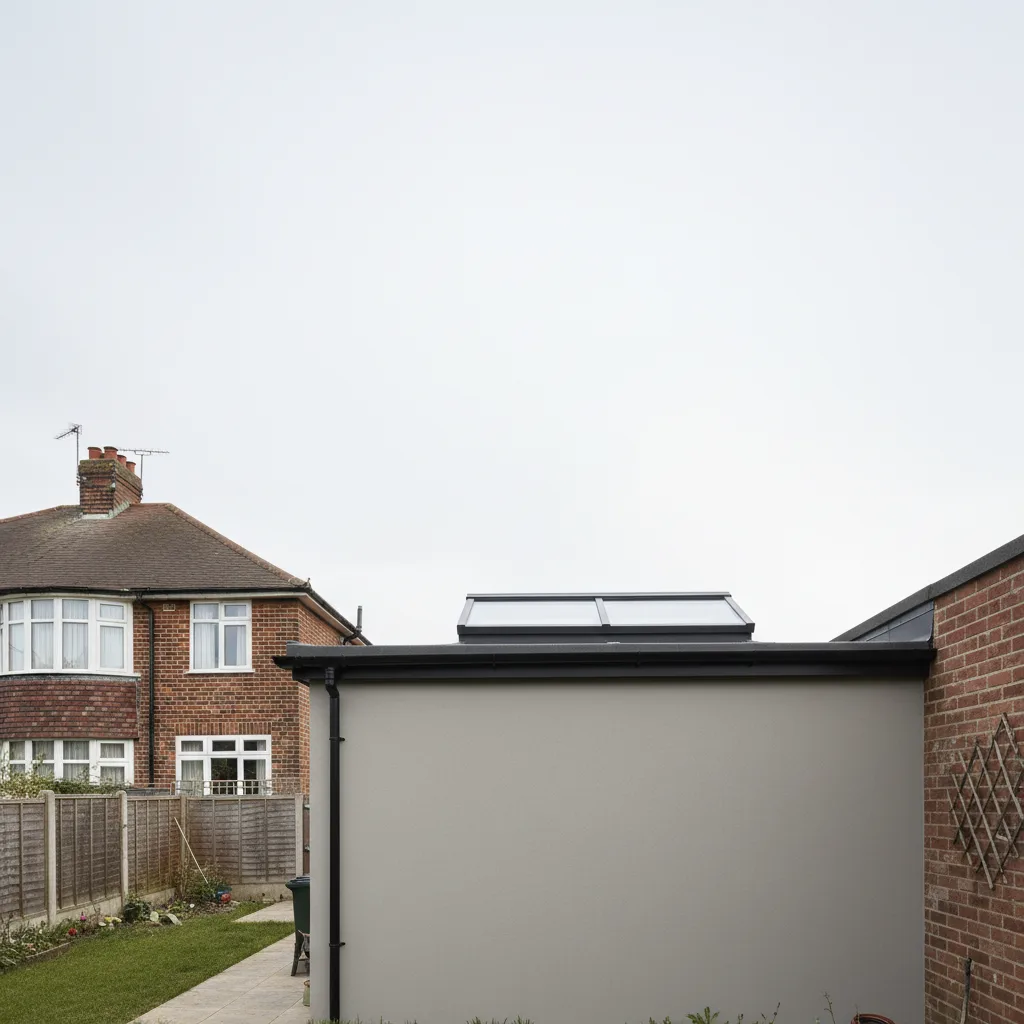
A blind on a roof window does two jobs that people tend to muddle together: it controls the light in the room, and it controls the heat coming in with it. Those are not the same task, and no single blind is best at both. Get the distinction clear and the choice becomes simple. Miss it, and you end up with a blackout blind fitted to keep a bedroom dark that does almost nothing about the reason the room is too hot to sleep in.
What a roof window blind is actually for
Start with the honest split. Light control is about how dark you can make the room and how you soften glare on a screen or a pale wall. Heat control is about how much of the sun’s energy you stop before it turns the room into a warm box. A blackout blind is superb at the first and mediocre at the second. An external shade is the reverse. Most people buy for darkness, discover the overheating in the second summer, and then wonder why the expensive blackout blind did nothing to cool the room.
The reason is where the shading sits relative to the glass. Anything you hang on the inside is working on heat that has already passed through the pane and is now in the room. It can reflect some of that heat back towards the glass, but a lot of it stays trapped in the gap between blind and glass, warms that pocket of air, and leaks into the room anyway. Anything you fit on the outside stops the sunlight before it ever reaches the glass, so the heat never gets in. That single fact, inside versus outside, matters more than the colour, the fabric or the brand printed on the box.
None of this means internal blinds are pointless. For most rooms they are the sensible answer, because they are cheaper, they last, they are easy to operate and they solve the light problem completely. It means you should know which problem you are solving before you spend the money, and you should not expect an interior blind to carry a heat load it was never built to carry.
The blind types, and what each one does
Roof window blinds come in a handful of recognisable formats. They vary in how they block light, whether they add any insulation, and how they cope with a sloping installation where gravity is pulling the fabric away from the glass. The pitched-roof geometry is what rules out ordinary curtains and most wall-window blinds: a roof blind needs side channels or a tensioned guide to hold the fabric flat against a sloping or near-horizontal frame.
Blackout blinds
An opaque fabric running in side channels, sealing at the edges to cut out as close to all the light as a domestic product manages. This is the bedroom and nursery blind, and the one to buy if a dark room is the goal. The aluminium backing on many blackout fabrics reflects a share of the solar heat, so they help a little with temperature, but the fabric is still on the warm side of the glass and the help is modest.
Pleated and honeycomb blinds
Pleated blinds fold into a concertina. The honeycomb, or cellular, version is the one worth understanding: the pleats form sealed air pockets in cross-section, and that trapped air adds a layer of insulation across the glass. In winter a honeycomb blind measurably slows heat loss through the rooflight, which is the one case where an internal blind improves the U-value of the opening rather than just the look of the room. In summer a light-reflecting honeycomb fabric knocks back some of the gain too. It is the most all-round of the interior options.
Roller blinds
A single sheet of fabric on a top roller, guided down side rails. Simple, cheap, reliable, and available in translucent fabrics that dim glare while keeping the room bright, or in dimout weaves for something between sheer and blackout. A roller in a light, reflective fabric is a reasonable glare-and-heat compromise where full darkness is not needed.
Venetian blinds
Tilting slats, usually aluminium, that let you throw the light towards the ceiling instead of straight down. Good for a home office where you want to kill screen glare without losing the daylight, less good as a heat or blackout solution because the slats never seal.
External awning blinds
A mesh screen that sits on the outside of the roof window, above the glass. This is the one that actually stops solar gain, because it intercepts the sunlight before it reaches the pane. The mesh is see-through from inside, so you keep the view and a lot of the daylight while the heat is turned away outdoors. It does nothing for blackout, so the usual answer on a bedroom is an external awning for the heat paired with an internal blackout blind for the dark. On a south-facing loft that overheats, this is the combination that works.
How the formats compare
These are typical, industry-general figures for the common roof window blind formats. Solar heat reduction depends on fabric colour, glass and how well the blind seals at the edges, so read the numbers as the shape of the difference rather than a guarantee for a specific product. What matters is the pattern between the rows, and the gap between everything internal and the external awning at the bottom.
| Blind format | Position | Blackout | Typical solar heat reduction | Adds insulation | Indicative price per window |
|---|---|---|---|---|---|
| Blackout, side channels | Internal | Full | Around 30 to 45 per cent | Slight | £60 to £130 |
| Roller, translucent | Internal | None | Around 20 to 35 per cent | No | £45 to £100 |
| Pleated, standard | Internal | Dimout | Around 25 to 40 per cent | Slight | £55 to £120 |
| Honeycomb, cellular | Internal | Dimout to full | Around 30 to 45 per cent | Yes, winter and summer | £70 to £150 |
| Venetian, aluminium slats | Internal | None | Around 15 to 30 per cent | No | £60 to £130 |
| External awning mesh | External | None | Around 60 to 80 per cent | No | £90 to £200 |
Read across the solar reduction column and the story is plain. Every interior blind lands in a similar band, roughly a third of the gain, because they are all working on heat that is already inside. The external awning roughly doubles that, not because the mesh is cleverer but because of where it sits. If your problem is a room that overheats, the position of the blind decides the outcome, and the fabric choice is a detail on top of it.
The price column is a guide to fabric-and-hardware cost for a single standard-sized window, not an installed figure, and it moves with size and with whether the blind is manual, electric or solar-powered. Made-to-measure and non-standard sizes push the top of each range higher.
Manual, electric or solar operation
A roof window is often out of easy reach, and that changes how you drive the blind. There are three ways to operate one.
Manual blinds use a control bar or a pull cord, or a hooked pole for the ones mounted high on a slope or over a stairwell. Cheapest to buy, nothing to power, and fine on a window you can touch from the floor. Above about two and a half metres you will get tired of the pole and the blind will end up left in one position all summer, which defeats the purpose.
Electric blinds run on a small motor wired into a spur, operated by a wall switch or remote. The right answer for high or awkward positions, and for anyone who wants the blinds to move on a timer or close automatically as the room warms. If you are already having the wiring run for a motorised opening rooflight, adding powered blinds to the same circuit is the tidy moment to do it, and it is worth planning the cable route before the plasterboard goes up. Our electric skylight installation work covers powered blinds set up on the same control as the window.
Solar-powered blinds carry a small photovoltaic cell and a rechargeable battery, so they need no wiring at all. They suit a retrofit where chasing a cable into a finished ceiling would mean redecorating, and they suit a south-facing roof particularly well, because the cell gets plenty of light exactly where the heat problem is worst. The trade is a slower motor and a battery that eventually needs replacing after years of service.
Blinds and the glass are two different levers
Here is where roof window shading has to be understood as a system rather than a single purchase. The glass in the window and the blind over it are two separate controls on the same problem, and each does something the other cannot.
The glass is the permanent, always-on layer. Solar-control glazing carries a coating that reflects the near-infrared heat before it enters the room, and it does that every hour of every day whether or not anyone is home to draw a blind. It cannot be forgotten, left open or worn out, and it does not dim the view. What it cannot do is give you a dark room on demand, and it cannot be adjusted when the weather changes. That is a permanent choice, settled once, at the point the window is fitted. On a south-facing roof it is the first line, and choosing the right coating for the aspect is the core of our energy-efficient skylight installation approach.
The blind is the adjustable layer on top. It gives you blackout for sleep, glare control for a screen, privacy at night and a bit of winter insulation from a honeycomb, and you move it as the day and the season demand. What it cannot do, from the inside, is match what good glass does about heat, because it is on the wrong side of the pane.
The practical upshot is that the two decisions should be made together, not one at the point of installation and the other as an afterthought two summers later. If the glass is specified correctly for a south-facing plane, the blind can be chosen purely for light and comfort, and an interior blackout or honeycomb will be plenty. If the glass is plain and the room faces south, you are asking the blind to carry a heat load it will struggle with, and you are into external awnings to make it liveable. This is one of the things we settle at survey on a pitched roof skylight installation, because the roof pitch and the compass direction decide how much of the work the glass should be doing before a blind is even discussed.
Why south Essex roofs lean on shading more than most
Southend faces south across the Thames Estuary, which is unusual for an English seaside city and is exactly why shading matters more here than the same house would need inland or on a north-facing coast. A south-facing roof plane along this stretch gets an open horizon, long sunlight hours by English standards, and extra reflected light bouncing up off the water. The roof windows on it are collecting through more of the day than most, so whatever governs the heat, glass and blind together, is doing more work.
The housing stock puts a lot of glass on those south planes. The county has a very large belt of 1930s semis, and the standard move on them is a rear extension or a loft conversion with rooflights facing the garden, which around here often means facing south. Loft bedrooms tucked into the Victorian and Edwardian villa roofs along the cliff frequently take a window into a south slope with no eaves shading above it. A south-facing loft bedroom is the room most likely to overheat and the one where the shading choice matters most, because a bedroom has to shed its heat overnight and a room that hits the high twenties by early evening is still uncomfortable at bedtime.
The other local wrinkle is planning. Most rooflights on a house are permitted development, but Leigh Cliff and Leigh conservation areas carry an Article 4 Direction that removes those rights for changes to windows and roofing, and Clifftown and Leigh Old Town are conservation areas as well. Blinds themselves are an interior fitting and are not a planning matter, but an external awning changes the outward look of the window, so on a protected elevation it is worth checking with Southend-on-Sea City Council before adding one. Treat that as general guidance and confirm it for your own address, because the lines of these designations run street by street.
Choosing well, and what to check
Pull it together into a short set of decisions and you can settle the whole thing in one conversation.
- Name the job first. Darkness, glare, heat, or a bedroom that needs all three. The answer tells you the format before you look at fabrics.
- Match the format to the job. Blackout in side channels for a dark room. Honeycomb where winter warmth and a bit of everything matters. An external awning where the room genuinely overheats, usually paired with an internal blind for the dark.
- Check the fit. Roof window blinds are sized to the frame, and the proprietary blinds made for a specific window brand seal against the frame far better than a universal blind clamped over the top. If you have a known window, buy the blind made for it. If you are choosing the window too, the neatest results come from picking a frame and its matched blinds together, which is part of any roof window installation we plan.
- Decide how you will operate it. Manual within reach, electric or solar for anything high, and plan the cable before the ceiling is closed if it is going to be wired.
- Ask what the glass is doing. On a south or west plane, if the glass is not already controlling solar gain, no interior blind will fully cover the gap, and you should know that before you buy rather than after.
A blind is the adjustable half of roof window shading and the glass is the permanent half, and a room that stays bright and comfortable through a July afternoon usually has both halves chosen on purpose. If you want the two settled together for your own roof, plane by plane and aspect by aspect, ask us for a specification that says what the glass will do and what the blinds are there to add.
Related reading
Roof pitch and what it means for a roof window
Roof pitch and what it means for a roof window. What it means in practice on Essex housing stock, and…
What roof pitch do I need for a roof window?
What roof pitch do I need for a roof window? The short answer, then the detail that actually matters.
Fitting a roof window into a tiled roof
Fitting a roof window into a tiled roof. What it means in practice on Essex housing stock, and how we…
How much does a pitched roof skylight cost?
How much does a pitched roof skylight cost? The short answer, then the detail that actually matters.
Do you need planning permission for a roof window?
Do you need planning permission for a roof window? The short answer, then the detail that actually matters.
Slate roofs and flashing kits explained
Slate roofs and flashing kits explained. What it means in practice on Essex housing stock, and how we approach it.