Cracked and yellowed rooflights: replace or overlay
Cracked and yellowed rooflights: replace or overlay. What it means in practice on Essex housing stock, and how we approach it.
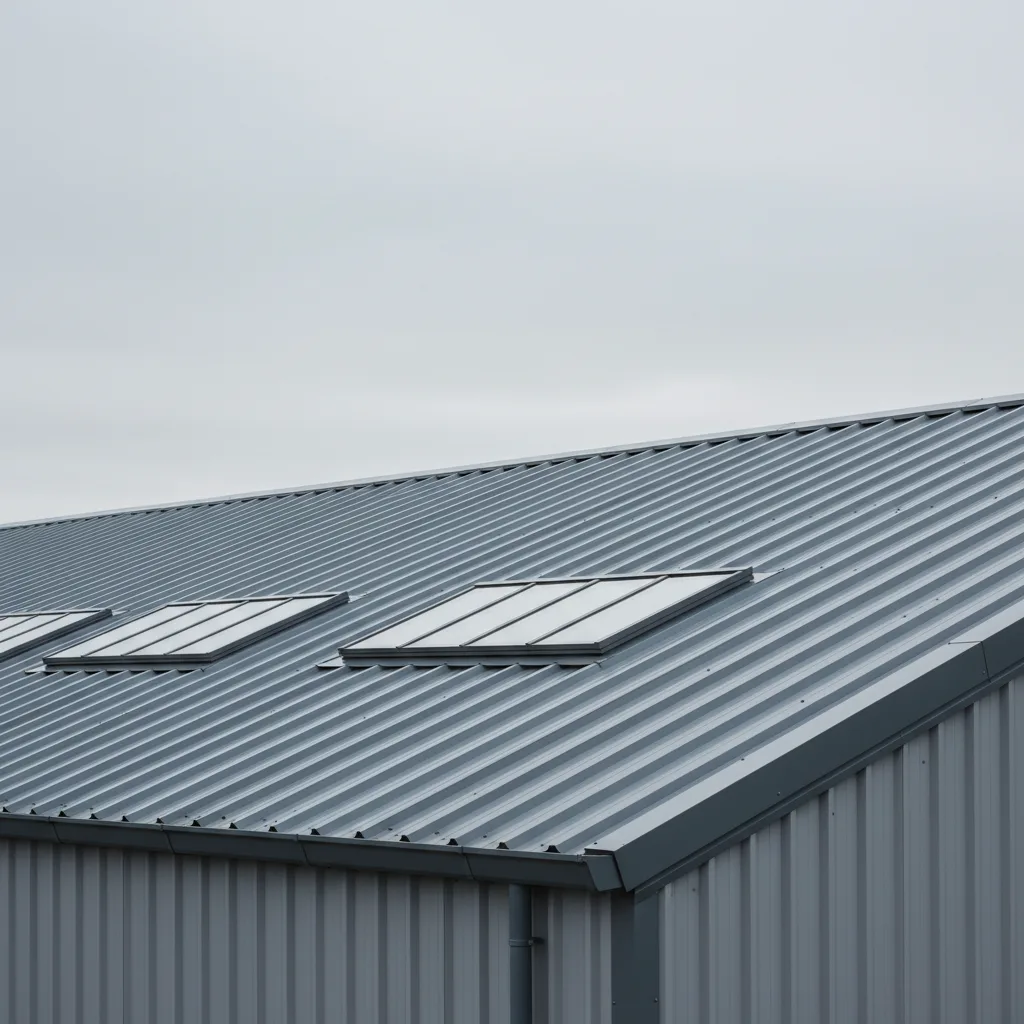
A rooflight that has gone brown and brittle is telling you two separate things. It has stopped letting light through the way it did, and it has stopped being safe to stand near. On a commercial roof those are not the same problem, and they do not always point to the same answer. Sometimes a new unit fitted over the old aperture is the sensible move. Sometimes the only honest option is to take the whole thing out. This page walks through how to tell which is which.
Why rooflights crack and go yellow in the first place
Almost every discoloured rooflight is made of plastic, and plastic on a roof lives a hard life. It sits in full ultraviolet for every daylight hour it has, it expands and contracts through a wide temperature swing between a frosty dawn and a black roof surface at noon, and it takes hail, grit and standing water with nothing above it for shelter. The material that yellows is doing so because the polymer chains at the surface are breaking down under UV. The material that cracks is doing so because it has gone brittle and can no longer flex through its daily movement without splitting.
The three plastics you meet most often on older commercial roofs each fail in their own way. Glass reinforced polyester, usually called GRP, is the corrugated or profiled translucent sheet on a lot of 1970s and 1980s industrial units. It goes yellow, then the resin surface erodes and the glass fibres beneath start to show as a whitish bloom, and light transmission drops away long before the sheet actually fails. Unmodified PVC and older polycarbonate domes yellow and craze, developing a fine web of surface cracks that scatter light and eventually let water track through. Acrylic, or PMMA, holds its colour far better than the others but is the most brittle of the group, so an old acrylic dome is more likely to shatter than to slowly fog.
The pattern to take from this is simple. Yellowing is a light problem. Crazing and brittleness are a safety and weather problem. A rooflight can have one without much of the other, and the balance between them is the first thing that steers the decision towards an overlay or a full replacement.
What “overlay” and “replace” actually mean on a roof
These two words get used loosely, so it is worth being exact about what each one involves, because the difference decides the cost, the disruption and what the building regulations have to say about it.
A replacement removes the failed unit completely. On a profiled metal or fibre-cement roof that means lifting out the old translucent sheet and fitting a new in-plane rooflight sheet that matches the profile and laps into the surrounding metal. On a flat roof it means taking the old dome or lantern off its kerb, checking the upstand, and setting a new unit onto it with fresh weathering. You end up with one layer of glazing, correctly detailed, and the roof is back to a known condition.
An overlay leaves the existing aperture or kerb in place and fits a new unit over the top of it. On a flat-roof dome this can mean a new skin or a full new dome mounted on a raised frame above the old one. On a profiled roof it can mean a purpose-made over-sheet spanning the existing rooflight. The attraction is obvious: less strip-out, less exposure of the roof void to the weather while work is going on, and often a faster job over an occupied warehouse or workshop. The catch is equally real. You are building on top of something you have decided is no longer fit, you gain a sealed cavity between the two layers that can trap condensation and grime, and you rarely get to inspect or improve the upstand and the weathering underneath.
Neither of these is a stopgap, and neither should be sold as one. Overlaying a tired rooflight with a properly specified new unit is an installation in its own right. Coating over the old plastic to squeeze another year out of it is a different thing entirely, and if that is what a roof needs then a roofing contractor is the right call rather than a rooflight installer.
The safety question that overrides the light question
Before any conversation about daylight or U-values, there is a harder point. An aged plastic rooflight is very often fragile, and fragile rooflights are one of the most common causes of fatal falls through roofs on commercial buildings. Someone doing gutter clearance, running a cable, servicing plant or simply crossing a roof can put a knee or a foot onto a discoloured dome that looks solid and go straight through it.
A rooflight is classed as non-fragile only if the whole assembly, the glazing plus its fixings and frame, has passed a drop test to ACR[M]001, the industry test for the fragility of roof assemblies. A brand new non-fragile rooflight will hold the weight and the impact of a person falling onto it. A GRP or polycarbonate sheet that has sat in the sun for twenty five years has lost much of the strength it started with, and any non-fragile rating it once carried is long gone. The Health and Safety Executive treats every rooflight as fragile unless there is evidence to the contrary, and that is the right way to think about an old one.
This changes the decision in a way that pure appearance does not. If a rooflight is on a roof that people ever access, and it has reached the age and colour where it is discoloured and brittle, its fragility is a reason to deal with it now rather than at the next re-roof. It also weighs on the overlay question, because an overlay that leaves a fragile old sheet in place underneath a new one has not removed the hazard, it has only hidden it. A replacement with a tested non-fragile unit resets the roof to a safe, known state. That is often the deciding factor on a commercial building where maintenance access is a genuine and regular thing.
When an overlay is the sensible option
Overlaying earns its place in specific circumstances, and it is worth being honest about them rather than treating it as the cheap default.
- The rooflight has yellowed and lost light transmission but the surrounding roof and the upstand or kerb are sound and watertight. You are solving a daylight problem, not a leak.
- The building cannot easily be opened up. A live production floor, a cold store, a data hall or a stocked warehouse where dropping the roof void open to the weather is a real operational cost.
- The existing structure and detailing were done well and there is nothing underneath worth inspecting or correcting.
- Access is straightforward enough that a person will not need to work directly over a fragile sheet, or the overlay system itself provides fall protection as part of the design.
Where an overlay is chosen, the new outer unit should be specified as if it were the only glazing, because in daylight and weather terms it now is. It carries the non-fragility rating, it carries the U-value, and on a south-facing roof it carries the solar-control specification. The old layer beneath it is doing nothing useful and should not be counted on for anything.
When replacement is the right call
The balance tips towards a full replacement more often than an overlay salesman would like to admit, and usually for one of these reasons.
The upstand or the weathering has started to let go. Once water is tracking in around the unit rather than through it, overlaying the glazing solves nothing, because the leak is in the detail underneath. That detail can only be put right with the old unit off.
The rooflight is cracked, not just yellowed. A crazed and splitting dome is a fragility hazard and a water risk at the same time, and burying it under an overlay leaves both live. Taking it out and fitting a tested non-fragile replacement is the only way to clear the hazard properly.
The roof is being upgraded anyway. If the covering is being renewed, the rooflights come out as a matter of course and go back as new units detailed into the fresh roof, which is far tidier than working around an overlay later. This is the moment to get the glazing specification right for the next twenty five years rather than the last twenty five.
The building is changing use. A warehouse being turned into offices, trade counters or gyms, which is common across the industrial estates around Basildon, Purdeys and Shoeburyness, brings people underneath the roof all day. That raises the bar on both daylight quality and, on the south-facing planes, on solar gain, and it usually justifies starting from a clean sheet.
Materials and how long they actually last
Choosing what goes back in, whether as an overlay skin or a replacement, comes down to the glazing material. These are industry-typical figures for how these materials behave on a commercial roof. Exact life depends on grade, thickness, coating and exposure, so read them as the shape of the choice rather than a promise.
| Material | Typical service life | How it fails | UV behaviour | Notes |
|---|---|---|---|---|
| GRP profiled sheet | 15 to 25 years | Fibre bloom, resin erosion, light loss | Yellows, then whitens | Cheap, matches metal profiles, but the first to go dim |
| Multiwall polycarbonate | 15 to 25 years with UV layer | Yellowing, cavity dirt, delamination | Good if the UV-protected face is fitted outwards | Light, tough, poor U-value unless multi-skinned |
| Solid polycarbonate | 20 to 30 years | Surface crazing, yellowing at the end | Very strong, needs a UV coating | Almost unbreakable, used where impact matters |
| Acrylic (PMMA) dome | 25 to 30 years | Brittle fracture, shattering | Excellent, barely yellows | Stays clear for decades but is brittle |
| Sealed glass unit | 25 to 35 years plus | Seal failure, misting | Does not degrade in UV | Best optics and U-value, heaviest, needs support |
The headline from the table is that acrylic and glass keep their light for the longest, GRP and multiwall polycarbonate are the ones that turn yellow and dim years before they leak, and every plastic loses strength with age regardless of how it looks. If a roof is being reglazed for daylight reasons, matching or bettering the original material is the least you should aim for, and glass is the option that does not come back to the same problem.
Solar gain, glare and the south-facing roof
There is a reason to think about more than just clarity when a commercial rooflight is being replaced, and it is specific to this stretch of coast. Southend-on-Sea faces south across the Thames Estuary, and a flat commercial roof faces straight up into the same open southern sky. A rooflight lying flat collects more solar energy per square metre than a wall window ever does, because the summer sun strikes it much closer to square on. On a warehouse that has become offices or a shop floor, a roof full of clear glazing can turn the space below into somewhere nobody wants to work between the middle of the day and late afternoon.
Two numbers describe this. The U-value governs winter heat loss and is the figure the building regulations police. The G-value, the solar factor, is the share of the sun’s energy that comes through the glass as heat, and it is the number that decides whether the room overheats in summer. Clear double glazing sits at a G-value of around 0.6, letting most of the sun’s heat straight in. Solar-control glazing brings that down to around 0.3 while keeping the space bright, because a good coating blocks the near-infrared heat rather than dimming the visible light. Old GRP and yellowed polycarbonate do neither job well: they scatter and dim the light you want and do little about the heat you do not.
So a replacement on a south-facing commercial roof is a chance to settle the overheating and the glare at the same time as the daylight, by specifying solar-control glazing matched to the aspect. North-facing planes can take clear glass and all the light they can get. South and west planes are where the G-value earns its keep. Anyone quoting a single glazing specification across a whole roof without asking which way it faces has not looked at the compass.
Regulations, cost and how to decide
Replacing rooflights on a commercial building is notifiable work, and Part L of the Building Regulations sets a limiting U-value for the new units. For replacement rooflights in an existing non-domestic building the limit typically sits in the region of 1.8 to 2.2 W/m²K, which rules out a bare single-skin GRP sheet and points towards multiwall polycarbonate, an insulated dome or a glass unit. An overlay that adds a second skin can help the thermal figure, but it still has to be specified to hit the target rather than assumed to. Part 4 safety and fragility duties under health and safety law sit alongside this, which is why the non-fragility of the new unit matters as much as its U-value.
On cost, treat these as industry-typical guidance rather than a quote. Replacing individual GRP rooflight sheets on a profiled metal roof commonly runs from around £150 to £400 per sheet fitted, depending on access and profile. A flat-roof dome or lantern replacement on an existing kerb often sits between £400 and £900 per unit for a good non-fragile double-skin, more for large or glass units. Overlays can come in lower on strip-out cost but the saving narrows once the new outer unit is specified to do the full job, and it disappears entirely if the upstand underneath turns out to need attention.
The decision, boiled down, comes to three questions. Is the surrounding roof and upstand sound, or is water getting in around the unit rather than through it? Is the old rooflight merely dim, or is it cracked and fragile enough to be a safety hazard? And does the space below need better daylight, lower summer heat, or both? If the structure is sound, the light is the only issue and opening the roof is genuinely disruptive, an overlay can be the right answer. If the detailing is failing, the plastic is brittle, or the building is changing to something people occupy all day, replacement is the sounder investment and the safer one.
Skylights On Sea installs and replaces rooflights across south Essex, and on commercial roofs the survey starts with the two things that decide everything else: the state of the structure and which way each roof plane faces. For a considered view on whether your rooflights should be overlaid or replaced, and a specification with both the U-value and the G-value written down for each plane, see our commercial skylight installation service, look at the options in polycarbonate and plastic rooflights and flat-roof units, or ask us for a specification for your roof.
Related reading
Non-fragile rooflights and roof safety
Non-fragile rooflights and roof safety. What it means in practice on Essex housing stock, and how we approach it.
What is a non-fragile rooflight?
What is a non-fragile rooflight? The short answer, then the detail that actually matters.
GRP rooflight replacement on an industrial roof
GRP rooflight replacement on an industrial roof. What it means in practice on Essex housing stock, and how we approach…
How much does commercial rooflight replacement cost?
How much does commercial rooflight replacement cost? The short answer, then the detail that actually matters.
Barrel vault and northlight rooflights
Barrel vault and northlight rooflights. What it means in practice on Essex housing stock, and how we approach it.
How often should industrial rooflights be replaced?
How often should industrial rooflights be replaced? The short answer, then the detail that actually matters.