Do skylights make a room too hot?
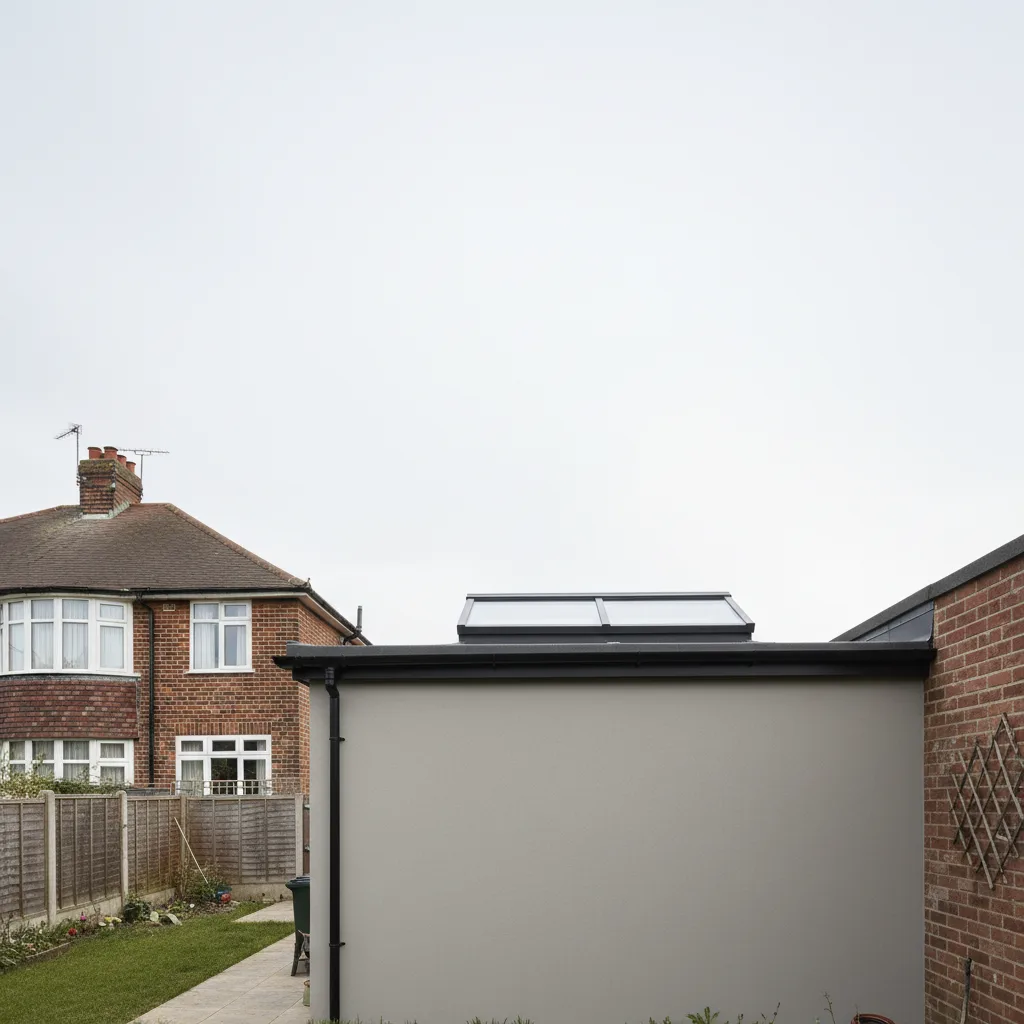
They can, but the heat is not caused by the hole in the roof. It comes from sunlight passing through the glass, so whether a room overheats depends almost entirely on which way that roof faces and what specification the glazing carries. Put clear glass in a roof that catches the sun and yes, the room below will run hot in summer. Put the right solar-control glass in the same opening and it stays bright without turning into an oven.
The heat is coming through the glass, not around it
When people say a skylight makes a room too hot, they usually picture warmth leaking in at the edges. That is not what is happening. A properly fitted rooflight is sealed and insulated at the upstand, and very little heat gets past the frame either way. The energy arrives as light. Sunshine hits the glass, part of it passes straight into the room, and part is soaked up by the panes and then radiated inwards a few minutes later. Both halves land as heat, and both are governed by a single figure called the G-value.
The G-value is the share of the sun’s energy that ends up inside. Clear double glazing sits somewhere around 0.6, meaning roughly six parts in ten come through as heat. Glass built for solar control brings that down to about 0.3 or lower. Same size opening, same daylight overhead, but half the heat load in the room. That one number is the difference between a skylight you enjoy and one you learn to dread by mid-July.
Which roofs actually overheat, and which never do
Not every skylight is a problem. A north-facing pitch only ever sees soft, indirect light, so clear glass there is the sensible choice and the small amount of warmth it lets in during winter is welcome. The trouble starts as the roof turns to face the sun.
- South-facing pitches take direct sun from mid-morning to late afternoon right through the warm months. These are the rooms that overheat if the glass is wrong.
- West-facing pitches catch the afternoon sun after the building has already warmed up, which often feels worse indoors than a south roof reading the same figures.
- East-facing pitches get strong early sun, but the house has cooled overnight, so they rarely tip over into genuine discomfort.
- Flat roofs, lanterns and walk-on glazing point straight up at the sky rather than in any compass direction. In high summer the sun is almost overhead, so horizontal glass collects the most of all and has to be treated as the hottest case whatever way the house is oriented.
Size matters as much as direction. A single small roof window barely moves the temperature of the room beneath it. Three large panes over a deep kitchen extension are a different matter, because you have laid a big sheet of glass over the one room that already makes its own heat every time the hob is on. The more glazed area you fit relative to the floor below, the tighter the glass specification needs to be.
Why south Essex feels this more than most
Southend-on-Sea faces south across the Thames Estuary, which is unusual for an English seaside city and is the reason overheating is such a common complaint here. The southern horizon over the water is wide open, so a south-facing roof is not shaded by the house opposite or a line of trees the way an inland one often is. The glass gets the full run of the sun. On top of that, light bounces off the estuary and adds to the load, which is why rooms near the seafront can feel glary even when the sun is not shining directly onto the pane.
The local housing stock lines up badly with all that. The wide 1930s semi belt across Westcliff, Thorpe Bay and out towards Hadleigh was mostly built with gardens at the rear, and for a great many of those houses the rear elevation faces south. Bolt a flat-roofed kitchen extension onto the back, fit a couple of rooflights because the room runs deep and needs daylight, and the result is a sun trap over a cooking space. This is the pattern our energy-efficient skylight installation work is built to solve, by getting the orientation and the glass right before the unit ever goes in.
Specifying glass so the room stays comfortable
The answer is not to fit fewer or smaller skylights. It is to match the G-value to the direction the roof faces. As a rough guide, a south-facing or flat roof wants glass at around 0.3 or below, west sits a little above that, east a little higher again, and north can stay with standard clear glazing near 0.6. If the glazed area is large or the room already runs warm, drop a notch lower than those figures suggest.
Be careful how you buy it. “Solar control” is a marketing phrase, not a measurement, and it gets printed on glass that only manages 0.5. Ask for the specification sheet and read three numbers together: the G-value for heat, the light transmittance for how much daylight still comes through, and the U-value for winter warmth. A strong solar-control coating trims some daylight and can carry a faint tint, so you want to weigh the whole picture rather than chase the lowest heat figure alone. The extra cost over clear glass is modest on a single window and more noticeable across a big lantern, and our skylight installation costs page shows where that tends to fall.
Glass is the main lever, but not the only one. External shading beats any coating, because it stops the sun before it reaches the pane at all. Internal blinds help with glare but do much less once the heat is already inside. Ventilation earns its keep too: an opening rooflight at the highest point of the room lets the hottest air escape, and on a flat roof skylight installation we often pair one opening unit with non-opening solar-control panes rather than push the coating to its limit. Used together, the right glass and a way to let heat out will keep even a big south-facing extension comfortable through the summer.
What to do next
Start by standing in the room and noting which way the roof faces, whether it is pitched or flat, and how much glass you are planning against the size of the floor. That tells you most of what you need. If it faces south, or if it is a flat roof or lantern, plan on solar-control glazing from the outset rather than treating it as an upgrade later. Our skylight guides go through the glass choices in more detail if you want to read further before deciding.
If you would rather we worked it out for you, tell us the orientation and the rough opening size and we will come back with a glass specification and a price. Ring 01702 898232 or request a quote, and we will look at the whole roof rather than just the gap you want to put light through.
Related reading
G-value explained, and why it matters more than U-value here
G-value explained, and why it matters more than U-value here. What it means in practice on Essex housing stock, and…
What is a good G-value for a skylight?
What is a good G-value for a skylight? The short answer, then the detail that actually matters.
Solar control glazing for south-facing roofs
Solar control glazing for south-facing roofs. What it means in practice on Essex housing stock, and how we approach it.
What U-value does a rooflight need for building regulations?
What U-value does a rooflight need for building regulations? The short answer, then the detail that actually matters.
U-values, Part L and rooflight compliance
U-values, Part L and rooflight compliance. What it means in practice on Essex housing stock, and how we approach it.
Overheating in a south-facing kitchen extension
Overheating in a south-facing kitchen extension. What it means in practice on Essex housing stock, and how we approach it.