What is a good G-value for a skylight?

For a south-facing roof, ask for glazing with a G-value of around 0.3 or below. Facing north, 0.5 to 0.6 is fine and you will be glad of the free warmth in winter. East and west sit between those two figures, and a flat roof needs treating as south-facing no matter which way the house is turned, because it points at the sky rather than at a compass direction.
What the G-value number is actually measuring
The G-value, sometimes written as the solar factor or just g, is the proportion of the sun’s energy that gets through the glass and ends up as heat in your room. It runs from 0 to 1. Glass with a G-value of 0.6 lets roughly 60 per cent of that energy through. Glass at 0.28 lets through a little over a quarter.
That figure covers two routes in. Some energy passes straight through the glass. The rest is absorbed by the panes and the coating, warms them up, and radiates inwards afterwards. A solar-control coating works on both, which is why it keeps performing on a still afternoon when there is no breeze to carry the heat off the outer pane.
Two numbers get confused with it constantly. The first is light transmittance, the amount of visible daylight that comes through. The second is the U-value, which measures how fast heat leaks out on a cold night. They are separate problems in separate seasons. Building Regulations put a ceiling on the U-value of a new or replacement rooflight under Part L, but they set no equivalent ceiling on the G-value of the unit you drop into an existing roof. That is exactly why so many south-facing extensions end up compliant on paper and unusable in July. We have written the longer version of that argument in our guide to G-value and why it matters more than U-value here.
The numbers to ask for, by orientation and roof type
Here is what we specify, before any adjustment for glazed area:
| Roof orientation | Sensible G-value | Reasoning |
|---|---|---|
| North-facing pitch | 0.5 to 0.6 | Diffuse light only. Standard clear double glazing is the right call and the winter gain is useful. |
| East-facing pitch | 0.35 to 0.45 | Strong low morning sun straight into the room, but the house has cooled overnight so it rarely tips into overheating. |
| West-facing pitch | 0.3 to 0.4 | Afternoon sun arrives when the building fabric is already warm. Worse in practice than east for the same figure. |
| South-facing pitch | 0.25 to 0.35 | Sun on the glass from mid-morning to late afternoon through the whole cooling season. |
| Flat roof, lantern or walk-on | 0.25 to 0.35 | Horizontal glazing sees the high summer sun almost square on. Orientation barely helps you. |
Then adjust for area. A single 780 by 980 mm roof window in a north-facing bedroom is a different proposition from a four metre lantern over a kitchen island. As a working rule, if the glazed roof area is more than about a sixth of the floor area of the room below, drop one band lower than the table says. Big glass punishes a lazy specification.
The arithmetic behind it is not complicated. On a clear July day the sun delivers something in the region of 800 watts to every square metre of a well-oriented surface. Put 1.5 square metres of clear double glazing at 0.6 in a flat roof and you are pushing roughly 700 watts of heat into the room, which is a small fan heater running all afternoon. Swap to 0.28 and the same opening delivers around 340 watts. The room still feels bright. It stops feeling like a greenhouse.
Why the estuary changes the answer round here
Southend-on-Sea faces south across the Thames Estuary, which is unusual for an English seaside city and is the reason we specify glass the way we do. Two things follow from it.
The first is an open southern horizon. Inland, a south-facing roof spends part of the day in the shadow of the house opposite, a mature tree line or a neighbouring terrace. Along the estuary there is nothing in the way, so the glass collects sun from mid-morning until the sun swings west. The second is reflected light off the water, which adds to the total on a bright day and is the reason seafront rooms can feel glary even when the sun is not directly on the glass.
The housing stock lines up badly with that. The 1930s semi belt across Southend, Westcliff, Thorpe Bay and out towards Hadleigh was mostly built with the garden at the back, and the back of a great many of those houses faces south. Add a rear kitchen extension with a flat roof, put two or three rooflights in it because the room is deep and needs daylight, and you have built a solar collector over the one room in the house that already generates its own heat from cooking. That combination is the classic south Essex overheating job, and it is the whole basis of our energy-efficient skylight installation work. The answer is the same whether the unit is new or a swap. If an existing rooflight over a hot room is coming out anyway, the replacement is the moment to change the glass specification, because the opening and the upstand are already there and the only variable left is what goes in them.
What a low G-value costs you
There are trade-offs, and anyone who tells you otherwise is selling.
- Daylight. Solar-control coatings cut visible light as well as heat. A clear unit might transmit 70 to 80 per cent of the daylight hitting it; a strong solar-control unit is often nearer 50 to 60 per cent. Ask for the light transmittance figure alongside the G-value and judge both together.
- Colour. Most solar-control coatings carry a slight tint, usually a faint blue, grey or green cast. It is barely readable from inside once your eye settles. It can be visible from the garden looking up at the glass, particularly on a lantern where you see several panes at once.
- Winter gain. Low G-value glass blocks the same sun in February that it blocks in July. On a north-facing roof that is a straight loss for no benefit, which is why the table above does not push the figure down everywhere.
- Price. Solar-control glazing adds to the unit cost against a clear equivalent. It is a modest addition on a single roof window and a more noticeable one across a large lantern. Our skylight installation costs page sets out where that lands.
Glazing is also not the only tool. External shading beats any coating, because it stops the energy before it reaches the glass, and blinds fitted inside help with glare but do far less for heat once it is already through. Opening rooflights that let hot air out at the highest point of the room do real work too, and on flat roof skylight installations we often pair a low G-value non-opening unit with one opening unit rather than push the glass specification harder.
How to check what you are being quoted
Ask for the glass specification sheet rather than a description. “Solar control” is a phrase, not a number, and it gets printed on units sitting at 0.5. The sheet should give you the G-value, the light transmittance and the U-value for the same build-up.
Check whether the G-value quoted is centre-pane or whole-unit. Centre-pane describes the glass only. Whole-unit averages the glass with the frame, so it reads lower for the same product. Comparing one supplier’s centre-pane figure against another’s whole-unit figure will point you at the wrong unit.
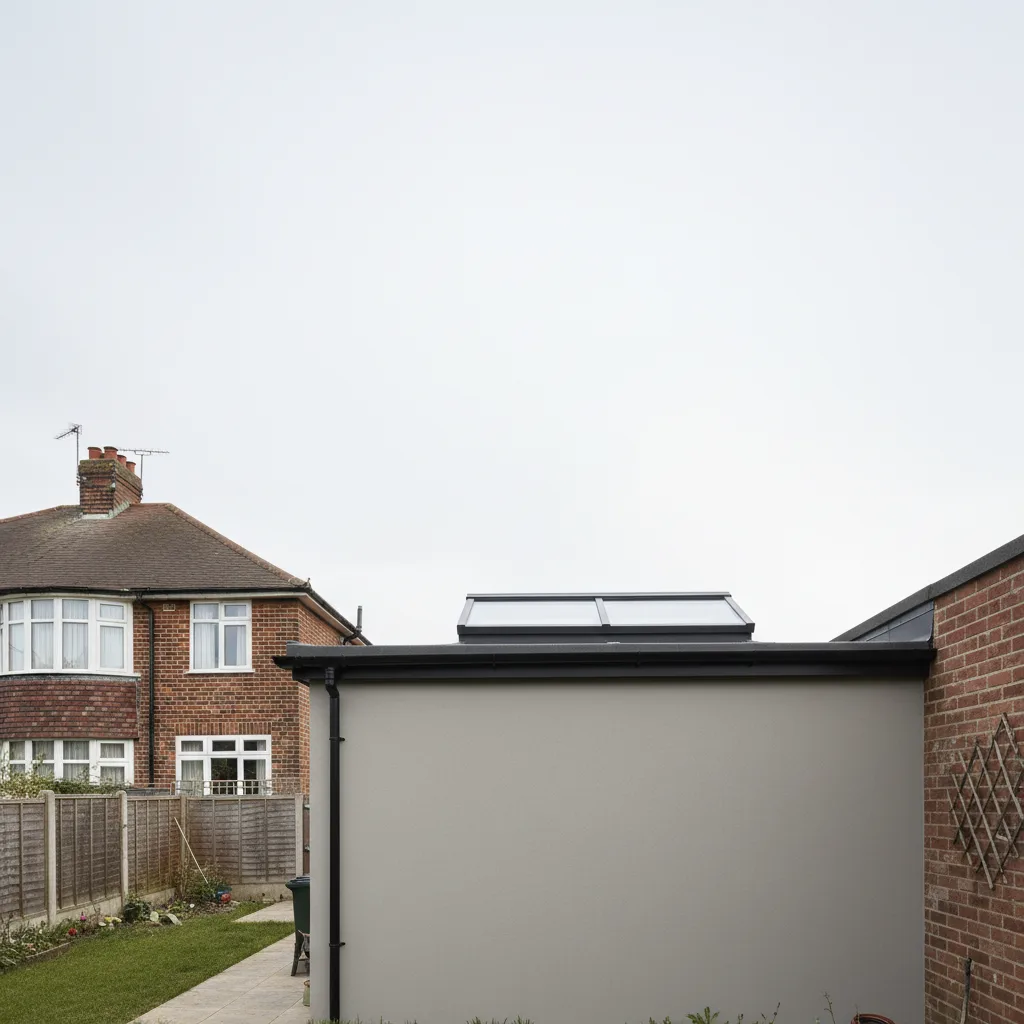
Then work out your own answer before anyone quotes you. Stand in the room, note which way the roof faces and whether it is pitched or flat, measure the glazed area you are planning against the floor area, and read the table above. If the room already runs hot, go a band lower.
If you would rather we did that part, tell us the orientation and the rough opening size and we will come back with a glass specification and a price. Ring 01702 898232 or request a quote, and we will look at the whole roof rather than just the hole in it.
Related reading
G-value explained, and why it matters more than U-value here
G-value explained, and why it matters more than U-value here. What it means in practice on Essex housing stock, and…
Solar control glazing for south-facing roofs
Solar control glazing for south-facing roofs. What it means in practice on Essex housing stock, and how we approach it.
What U-value does a rooflight need for building regulations?
What U-value does a rooflight need for building regulations? The short answer, then the detail that actually matters.
Do skylights make a room too hot?
Do skylights make a room too hot? The short answer, then the detail that actually matters.
U-values, Part L and rooflight compliance
U-values, Part L and rooflight compliance. What it means in practice on Essex housing stock, and how we approach it.
Overheating in a south-facing kitchen extension
Overheating in a south-facing kitchen extension. What it means in practice on Essex housing stock, and how we approach it.