What is the difference between a rooflight and a skylight?
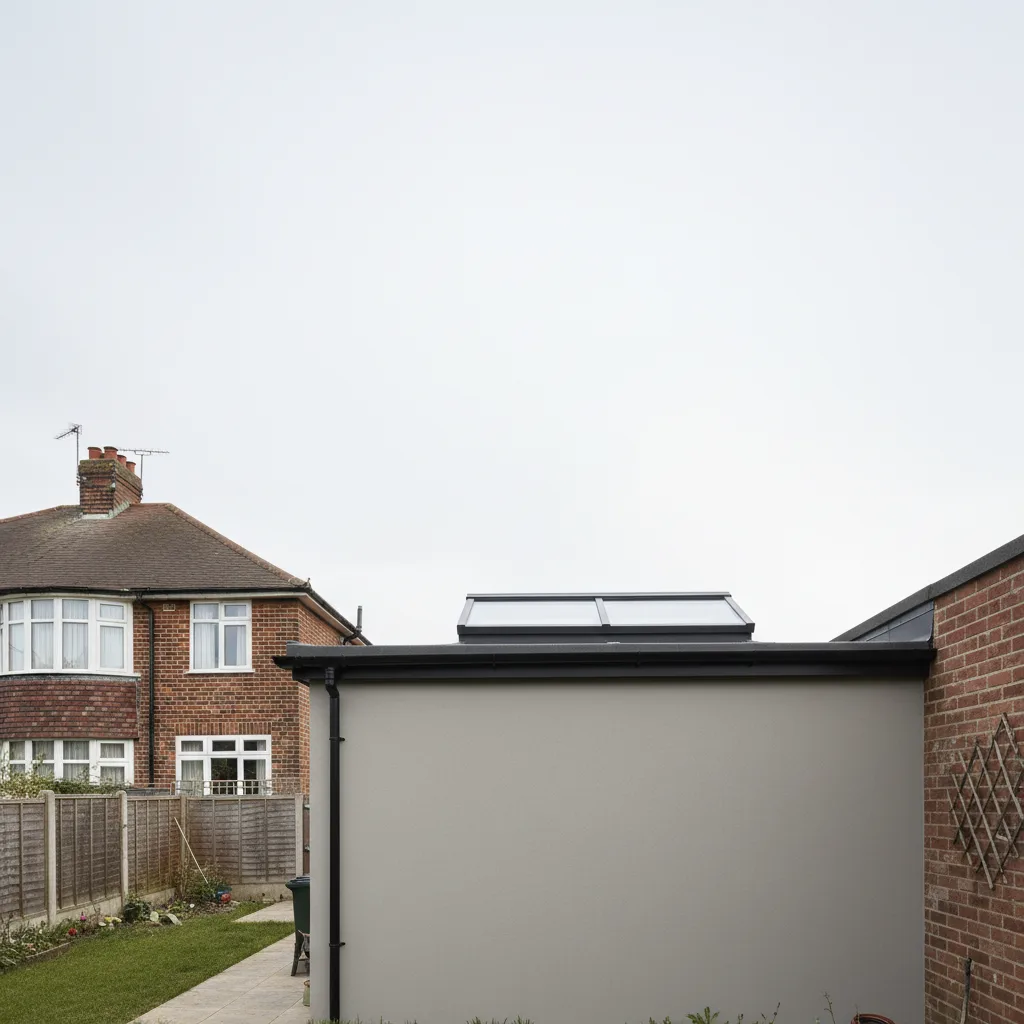
In everyday British use there is no real difference: rooflight and skylight both mean a glazed opening in a roof that brings daylight down into the room below, and most installers, architects and manufacturers use the two words interchangeably. Where people do draw a line, they tend to use “rooflight” for a unit that sits on a raised kerb on a flat or shallow roof, and “skylight” for a window set flush into a pitched roof, but that split is a convention rather than a rule, so the safest move is to describe what your roof is doing and what you want the glass to do rather than trust the label.
Why the two words exist at all
Both terms have been in the trade for well over a century, and they grew up describing slightly different things before the market blurred them together. “Skylight” is the older domestic word, the one most people reach for, and it carries a sense of a window you look up through at the sky. “Rooflight” arrived more from the commercial and industrial side, where large glazed panels were dropped into factory and warehouse roofs to light the floor without windows in the walls.
Over time the manufacturers stopped policing the boundary. A firm selling into house builders will happily call the same aluminium unit a rooflight on one page and a skylight on the next, because customers search for both. So when you read a product name, treat the word as marketing, not as a specification. Two units with different names can be structurally identical, and two units sharing a name can be built completely differently.
Where the words genuinely pull apart
There is a loose pattern underneath the muddle, and it is worth knowing because it maps onto the shape of your roof.
- Rooflight. Most often used for a unit fixed to an upstand or kerb, a raised frame that lifts the glass clear of a flat or low-pitch roof so water drains away from it. The glass can be flat, slightly pitched to shed rain, or domed. If your roof is flat, the thing you are buying is almost always sold as a rooflight.
- Skylight. Tends to describe a window sitting in the slope of a pitched roof, in the same plane as the tiles or slates. The roof itself provides the drainage angle, so no tall kerb is needed. This is the word most homeowners use for a loft conversion window.
- Roof window. A narrower term, usually reserved for a pitched-roof unit that opens, often on a central or top hung pivot, and is certified as a window you could escape through in a fire. Every roof window is a kind of skylight, but not every skylight is a certified roof window.
- Roof lantern. A raised, multi-faced glazed structure that stands proud of a flat roof like a shallow glass roof of its own. It is a type of rooflight, but the tiered shape earns it a name of its own.
None of these are fixed in law or in a British Standard as consumer terms, so a supplier who calls a domed flat-roof unit a skylight is not wrong, just using the broader word. The useful question is never “is this a rooflight or a skylight”, it is “does this sit on a kerb on a flat roof, or flush in a pitched roof”, because that decides the flashing, the drainage and how the unit is built.
The roof decides the unit, not the name
What matters for your project is the roof you already have, because that dictates which type of unit will actually work and how it has to be fitted. A flat or nearly flat roof needs a unit designed to shed water when the surface underneath it barely slopes, which means an upstand and a fall built into the kerb or the glass. Drop a pitched-roof window into a flat roof and water will sit against it.
A pitched roof does the draining for you. Here a flush skylight or a certified roof window sits in the line of the tiles, weathered in with flashing kits made for the tile or slate profile. The angle of the roof carries the rain off the glass, so the tall kerb of a flat-roof rooflight would look wrong and gain you nothing.
This is also where the words get practical. If you have a rear extension with a flat roof, or a garage or single-storey addition, you are almost certainly looking at flat roof rooflights, and our flat roof skylight installation work is built around exactly that situation. If you are converting a loft, you are in skylight and roof window territory, covered by our pitched roof skylight installation. The label follows the roof, not the other way round.
Why the glass matters more than the word
Whatever you call the unit, the thing that determines how the room feels is the glass in it, and this is where Southend catches a lot of people out. The city faces south across the Thames Estuary, so a great many rear extensions and loft rooms look straight into the sun for most of the day, with an open horizon over the water and no neighbouring roofline to shade the glass. A flat-roof rooflight is the worst case for this, because horizontal glazing sees the high summer sun almost square on and orientation barely helps you.
That is why the same-sized rooflight and skylight can behave completely differently in the same house. The number that governs summer heat is the G-value, the proportion of the sun’s energy the glass lets through as heat. Clear double glazing sits around 0.6, letting through roughly 60 per cent of that energy, while solar-control glass drops to around 0.3. On a south-facing flat roof over a kitchen, the gap between those two figures is the difference between a bright room and one you cannot use in July. We have set out the full argument in our guide to energy-efficient skylight installation.
Glare is the other half of the same problem. Reflected light off the estuary adds to the load on a bright day, and a large area of clear glass in a south-facing roof can leave a room dazzling even when the sun is not directly on it. Orientation, then glass specification, then the unit: that order is what actually decides whether you are happy under it, and none of it depends on whether the brochure said rooflight or skylight.
What to do next
Start by working out which roof you have, because that settles the question for you. If the roof is flat or barely pitched, you want a rooflight built for an upstand. If it is a proper slope, you want a flush skylight or a certified opening roof window. Then, before you compare prices, ask each supplier for the glass specification sheet: the G-value, the light transmittance and the U-value for the same unit, so you are comparing the glazing and not just the frame.
If the roof faces anywhere south of east or west, treat the solar-gain question as the main decision rather than an afterthought, and ask for a lower G-value than you think you need if the room already runs warm. You can read where the money goes on our skylight installation costs page, and if you would rather hand the whole thing over, tell us the roof type, the orientation and the rough opening size. Ring 01702 898232 or request a quote, and we will specify the light for your roof rather than sell you a name.
Related reading
Building a rooflight upstand on a flat roof
Building a rooflight upstand on a flat roof. What it means in practice on Essex housing stock, and how we…
Can you put a skylight in a flat roof?
Can you put a skylight in a flat roof? The short answer, then the detail that actually matters.
Fixed and opening flat rooflights compared
Fixed and opening flat rooflights compared. What it means in practice on Essex housing stock, and how we approach it.
How much does a flat roof skylight cost?
How much does a flat roof skylight cost? The short answer, then the detail that actually matters.
Walk-on rooflights and where they make sense
Walk-on rooflights and where they make sense. What it means in practice on Essex housing stock, and how we approach…
What is a rooflight upstand?
What is a rooflight upstand? The short answer, then the detail that actually matters.