Do skylights lose a lot of heat?
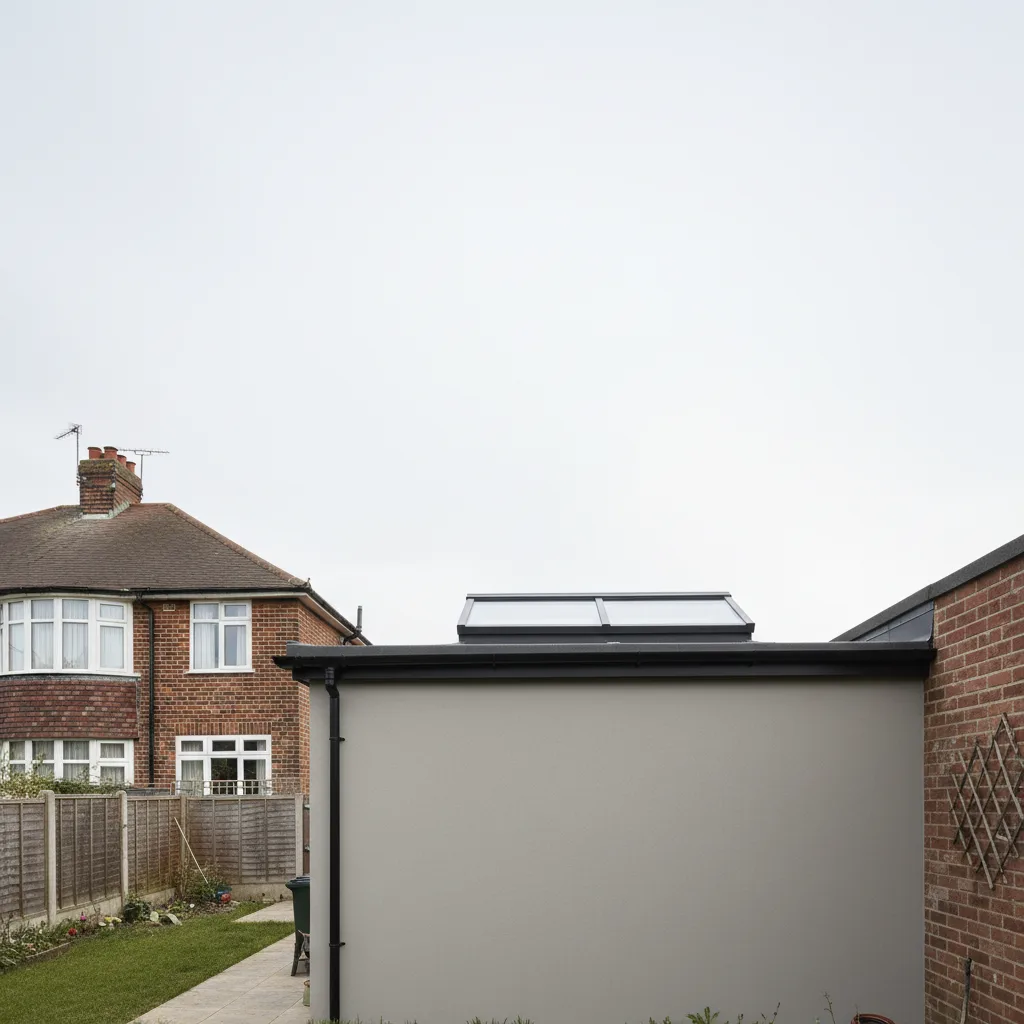
A modern, properly specified skylight loses no more heat than a good wall window, and far less than the single-glazed or early double-glazed units that gave rooflights their bad name. The reputation is real but out of date: old rooflights ran at U-values of 3 to 5 W/m²K, whereas a current double or triple-glazed unit sits somewhere between about 1.6 and 0.8, which is the same range as the windows on the walls below it.
Where the heat actually leaves through a rooflight
Heat loss through any glazed opening is measured by its U-value: the watts of heat that pass through each square metre for every degree of difference between inside and out. A lower number is better. The figure is not a property of the glass alone. It is an average across three parts of the unit, and each one behaves differently.
The glass itself is the largest area and, in a good unit, the best-performing part. A sealed double-glazed pane with a low-emissivity coating and an argon fill holds heat well. Add a third pane and the centre of the glass can reach 0.8 or lower. The frame is weaker. Aluminium conducts heat quickly unless it carries a thermal break, and a slim frame loses less simply because there is less of it. The third part is the one people forget: the upstand, the kerb that lifts a flat-roof rooflight clear of the surface. If that timber or metal box is not insulated to the same standard as the roof around it, the room loses heat through the sides of the opening no matter how good the glass is.
So the honest answer to whether a skylight loses a lot of heat depends less on the word “skylight” than on which unit, which frame and which upstand. Two rooflights of the same size in the same roof can perform a full band apart.
Why a roof opening loses more than the same window in a wall
A rooflight does have to work harder than a window on a wall, and it is worth being straight about why. Warm air rises and collects at the highest point of a room, which is exactly where the rooflight sits, so the air pressing against the glass is the warmest air in the house. A wall window meets cooler air lower down.
The roof is also the most exposed surface a building has. It faces the open sky rather than a sheltered elevation, it catches the wind from every direction, and on a clear night it loses heat by radiation to a sky that can be far colder than the air temperature. That night-sky effect is real and it is the reason a roof can carry frost when the ground below it does not. None of this makes a skylight a bad idea. It means the specification has to account for the position, which is where a lot of older installations fell short.
The numbers a new or replacement unit has to meet
You are not left to guess at this, because Building Regulations set a ceiling. Under Part L, a new or replacement rooflight in an existing dwelling has to meet a maximum U-value, and any reputable unit sold today is built to clear it. As a rough guide to what the market offers:
| Build-up | Typical U-value (W/m²K) | What it means for heat loss |
|---|---|---|
| Old single glazing | 4.5 to 5.5 | Loses heat fast. The source of the whole reputation. |
| Early double glazing, no coating | 2.8 to 3.2 | Better, but still a weak point in the roof. |
| Modern coated double glazing | 1.2 to 1.6 | In line with a good replacement window. |
| Triple glazing or warm-edge double | 0.8 to 1.1 | Close to the insulated roof around it. |
The gap between the top row and the bottom row is the whole story. If your memory of skylights is a cold spot under a 1990s dome, you are remembering the second row at best. Swapping a tired unit for a current one is one of the larger single improvements you can make to a room that runs cold, and because the opening and the kerb are already in place, replacing the glass is straightforward work rather than a fresh hole in the roof.
Heat loss in winter, solar gain in summer: the two sides of one pane
Here is the part people miss. The same glass that loses heat in January can also let heat in during July, and the two are governed by different numbers. The U-value describes winter loss. The G-value, the solar factor, describes how much of the sun’s energy the glass admits as heat. Push the glass to block all incoming solar energy and you also give up the free winter warmth a sunny rooflight collects on a cold bright day.
Which way you want that balance to fall depends almost entirely on which way the roof faces, and around here that matters more than most places. Southend-on-Sea faces south across the Thames Estuary with an open horizon and light reflecting off the water, so a south-facing rear extension collects sun for most of the day through the whole warm season. On that roof the summer problem usually outweighs the winter one, and you want solar-control glass with a lower G-value even though it gives back a little of the winter gain. On a north-facing roof the sun never lands directly, overheating is rarely the issue, and you keep a clear pane so the room takes every bit of warmth it can. Getting that trade-off right for the orientation is the core of our energy-efficient skylight installation work, and it is why glare and solar gain, not draughts, are the real south Essex conversation.
How to cut the loss, and what to do next
If a room feels cold under an existing skylight, the fix is rarely to lose the daylight. A few things move the number in the right direction:
- Match the upstand to the roof. An insulated kerb closes off the heat path around the sides of the opening. On a replacement this is the moment to put it right, because the reveal is open and accessible.
- Choose the frame, not just the glass. A thermally broken frame or a slim profile lifts the whole-unit figure. The specification sheet should give the whole-unit U-value, not only the centre-pane number, so you compare like with like.
- Add a blind for the coldest nights. A closed internal blind traps a layer of still air against the glass and cuts the overnight loss noticeably, without touching the daytime brightness.
- Fit fewer, better units. Three cheap rooflights lose more heat between them than one well-specified one that lets in the same daylight.
One thing worth saying plainly: if your existing rooflight is leaking water or the seal has misted, that is a job for whoever maintains your roof, not a heat-loss question. Where a failed unit is coming out, though, the replacement is your chance to fix the thermal performance at the same time, because the biggest lever is simply the age of the glass.
Start by finding out what you already have. Look for the manufacturer’s stamp on the frame or the glass spacer bar, note whether it is single, double or triple glazed, and check which way the roof faces. That tells you roughly which row of the table above you are sitting on and whether the answer is better glass, a better frame, an insulated upstand, or all three.
If you would rather we worked it out, tell us the rough opening size and the orientation and we will come back with a U-value and G-value specification suited to that roof, along with a price. Ring 01702 898232 or request a quote, and have a look at our skylight installation costs for where a replacement typically lands. We will specify the light for the way your roof faces rather than fit the same unit everywhere.
Related reading
G-value explained, and why it matters more than U-value here
G-value explained, and why it matters more than U-value here. What it means in practice on Essex housing stock, and…
What is a good G-value for a skylight?
What is a good G-value for a skylight? The short answer, then the detail that actually matters.
Solar control glazing for south-facing roofs
Solar control glazing for south-facing roofs. What it means in practice on Essex housing stock, and how we approach it.
What U-value does a rooflight need for building regulations?
What U-value does a rooflight need for building regulations? The short answer, then the detail that actually matters.
Do skylights make a room too hot?
Do skylights make a room too hot? The short answer, then the detail that actually matters.
U-values, Part L and rooflight compliance
U-values, Part L and rooflight compliance. What it means in practice on Essex housing stock, and how we approach it.