Does a tinted rooflight make a room dark?
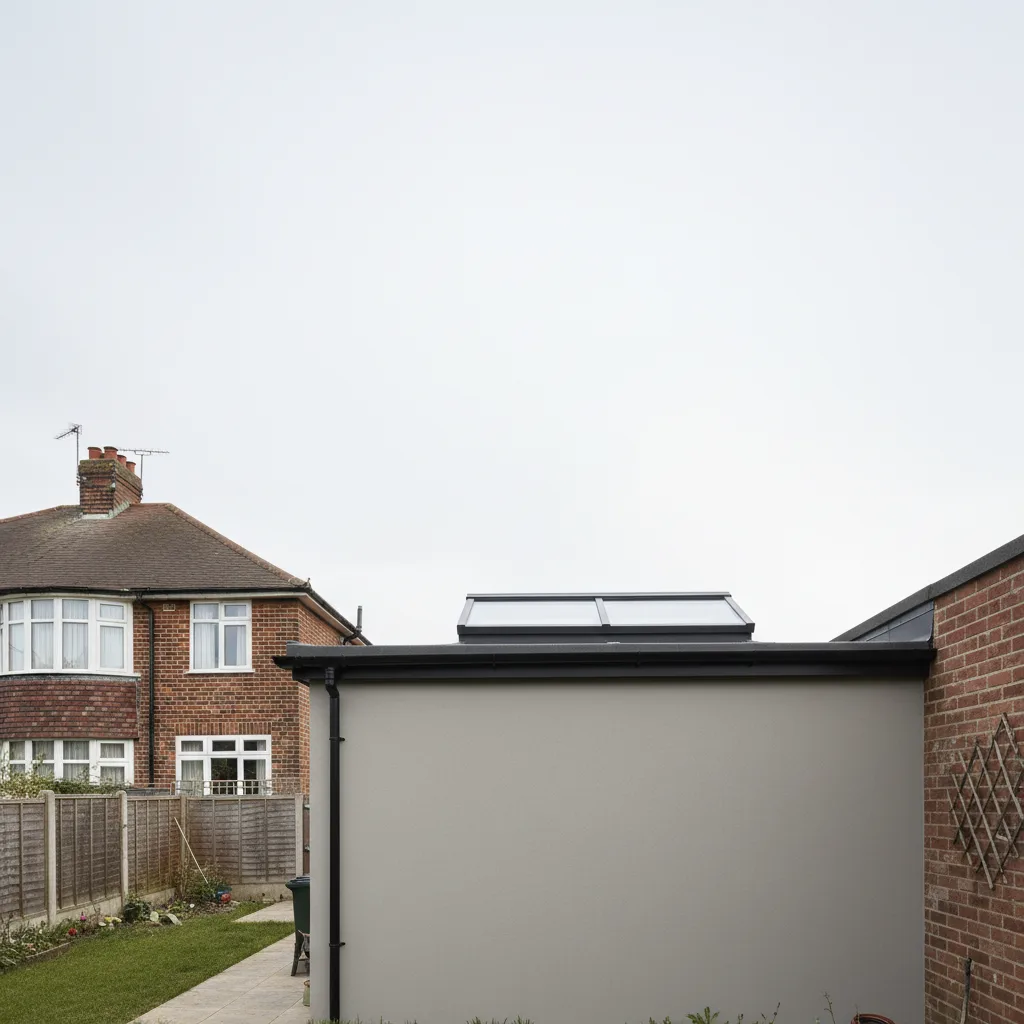
A well-chosen tinted rooflight makes a room cooler, not dark. Most tints still pass somewhere between 50 and 70 per cent of the daylight that hits them, which your eye reads as a bright room, and the darkening people fear only happens with heavy privacy or decorative tints that were never meant for a habitable space in the first place. The question worth asking is not whether a tint costs you daylight, but how much, and whether the heat it holds back is worth the small trade.
Two very different things get called a tint
The word covers two products that behave nothing alike, and confusing them is where the worry starts.
The first is a solar-control unit. The tint here is a microscopically thin metallic coating baked onto one of the glass faces during manufacture. It is engineered to reflect and absorb the infrared part of sunlight, the part you feel as heat, while letting most of the visible part through. You often cannot tell one is fitted until you stand in the garden and look up at the pane, where a faint blue, bronze or neutral cast shows. From inside, the room reads as ordinary daylight.
The second is a body-tinted or applied film glass, the sort used for privacy, glare screens or a smoked decorative look. This is closer to sunglasses. It knocks back visible light and heat together, more or less in step, so a heavy version genuinely does dim a room. It has its place on a bathroom or a west-facing screen where you want to cut a hard low sun, but it is the wrong tool for lighting a kitchen or a loft room, and it is almost certainly the product behind any story you have heard about a rooflight leaving a room gloomy.
When an installer talks about a tinted or solar unit for a living space, they should mean the first kind. If the difference is not spelled out on the quote, ask which one you are being offered, because the two land in completely different places on daylight.
The number that decides it is light transmittance
There is a single figure that tells you how bright the room will be, and it is not the tint’s colour or its name. It is the light transmittance, sometimes written as LT or the visible light fraction. It states the percentage of daylight the glazing lets pass. Clear double glazing usually sits around 75 to 80 per cent. A solar-control unit built for a living space typically comes in at 55 to 70 per cent. A heavy privacy tint can drop below 40 per cent, and that is the range where a room starts to feel shaded rather than lit.
Human sight does not track that scale in a straight line. Your eyes adjust continuously, so a drop from 78 to 62 per cent transmittance is barely readable once you are in the room and settled. It is the difference between full sun and a bright cloudy morning, and nobody calls a bright cloudy morning dark. You only cross into obviously dim territory when the figure falls a long way, which is exactly why the product matters so much more than the label.
Ask for the light transmittance number on the specification sheet and read it next to the G-value, the figure for how much solar heat the glass admits. A sensible living-space unit pairs a modest heat figure with a healthy daylight figure, and the sheet will show both. If a supplier can quote you a heat rating but goes vague on the daylight one, that gap is telling you something.
Why a bright room can still be too hot: the estuary problem
The reason tinted glass exists at all is that daylight and heat are separate problems, and round here they pull hard in opposite directions. Southend faces south across the Thames Estuary, which is unusual for an English seaside city, and it means a great many rear roofs collect sun from mid-morning until the afternoon with an open horizon and no shade in the way. The 1930s semi belt through Westcliff, Thorpe Bay and Hadleigh was largely built garden-to-the-back, so those south-facing rear extensions and loft rooms sit directly in the path of it.
Put clear glass over a room like that and you get plenty of daylight and a July afternoon that feels like a greenhouse. Fit a heavy privacy tint instead and you tame the heat but darken the room you were trying to brighten, which defeats the whole point of a rooflight. Solar-control glass exists precisely to break that trade: it holds back a large slice of the heat while surrendering only a little of the daylight. That balance is the specific thing this business is built on, and it sits at the centre of our energy-efficient skylight installation work, where orientation and glass specification come before the choice of unit rather than after it. A flat roof deserves particular mention, because a horizontal pane meets the high summer sun almost head-on and should be treated as south-facing whichever way the house happens to point.
When a tint really would take a room too dark
The fear is not baseless. There are cases where a tint genuinely leaves a room short of light, and it is worth knowing them so you can steer around them.
- The wrong product. A privacy or decorative smoked glass in a living room. As above, this is the biggest cause and the easiest to avoid.
- A north-facing roof. A north pitch only ever sees soft, diffuse light and no direct sun to control. Tinting it removes daylight you needed and holds back winter warmth you would have welcomed, all for a heat problem you never had. Standard clear glass is the right answer on a north roof.
- An undersized opening tinted to compensate. If a rooflight is too small for the room, dropping in a lighter clear unit will not rescue it, and a tinted one certainly will not. The answer is more glazed area, not a change of coating.
- A deep or narrow room. A long light shaft through a thick roof build-up eats daylight before it reaches the floor. Splaying the internal reveal so the opening widens as it comes down through the ceiling recovers a surprising amount, and matters more than a few percentage points of transmittance.
In each of these the darkness is a design decision made badly, not a property of tinted glass itself. Get the orientation, the size and the product right and a tint is something you notice in the summer, when the room stays comfortable, rather than something you notice on a dull day, when it does not.
How to choose, and what to ask for
Start with which way the roof faces and whether it runs hot in summer, because that decides whether you want a tint at all. A south or west-facing room, or any flat roof over a space you use in the day, is a strong candidate for solar-control glass. A north-facing room, or a room that already feels cool, usually is not.
Then ask the supplier for three numbers on the same unit: the light transmittance, the G-value and the U-value. The first tells you how bright, the second how cool in summer, the third how warm in winter. Judge the daylight figure and the heat figure together rather than letting one hide the other. Our skylight installation costs page shows where solar-control glazing sits against a clear equivalent, and it is a modest addition on a single roof window, more noticeable across a large lantern.
If you would rather not weigh the figures yourself, give us the orientation and a rough opening size and we will send back a glass specification that keeps the room bright while holding the summer heat outside. Ring 01702 898232 or request a quote, and we will consider the whole roof and the room beneath it, not only the opening you want glazed.
Related reading
G-value explained, and why it matters more than U-value here
G-value explained, and why it matters more than U-value here. What it means in practice on Essex housing stock, and…
What is a good G-value for a skylight?
What is a good G-value for a skylight? The short answer, then the detail that actually matters.
Solar control glazing for south-facing roofs
Solar control glazing for south-facing roofs. What it means in practice on Essex housing stock, and how we approach it.
What U-value does a rooflight need for building regulations?
What U-value does a rooflight need for building regulations? The short answer, then the detail that actually matters.
Do skylights make a room too hot?
Do skylights make a room too hot? The short answer, then the detail that actually matters.
U-values, Part L and rooflight compliance
U-values, Part L and rooflight compliance. What it means in practice on Essex housing stock, and how we approach it.