How much heat comes through a skylight?
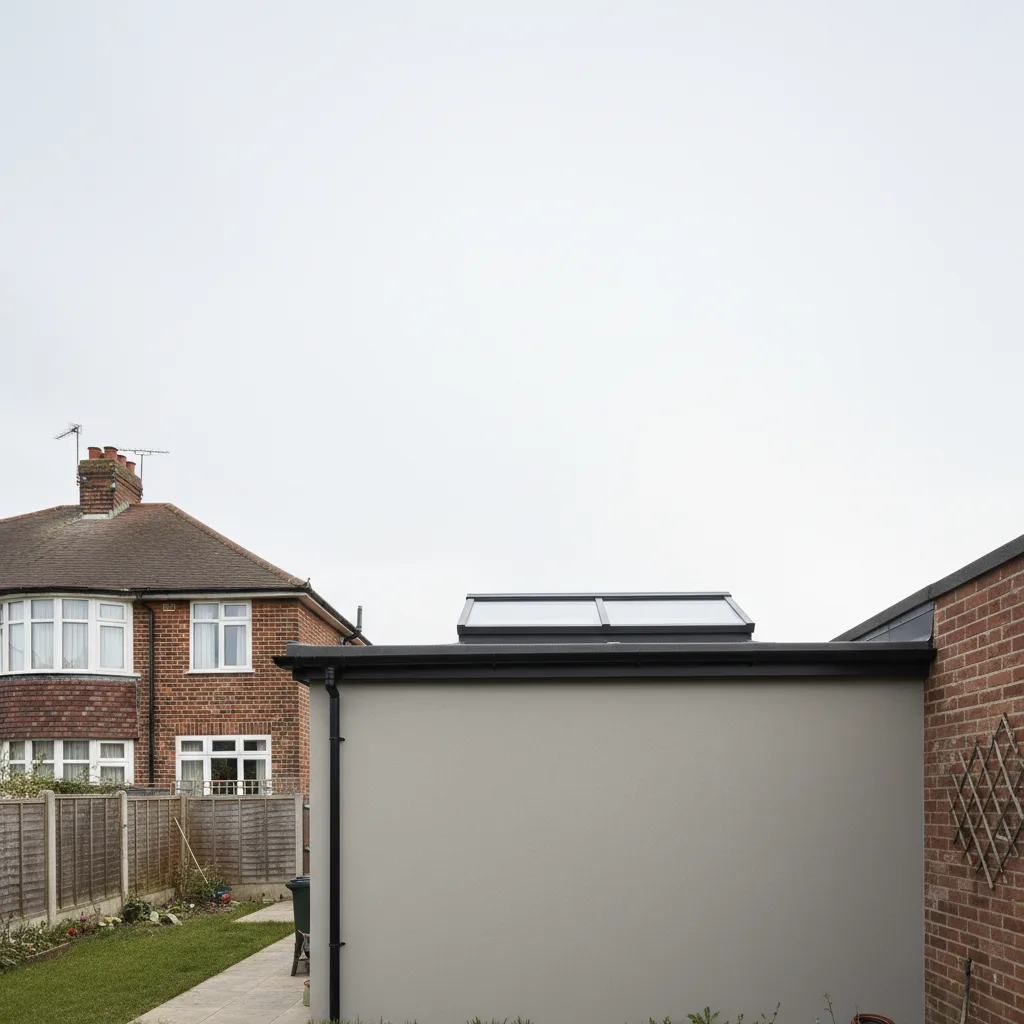
A clear double-glazed skylight passes roughly 60 per cent of the sun’s energy straight into the room below, which on a bright summer day works out at somewhere between 400 and 700 watts for every square metre of glass. Solar-control glazing cuts that share to about 30 per cent, so the same opening delivers around half the heat while still looking clear from inside. The exact figure depends on three things: the glass specification, the area of glazing, and which way the roof faces.
Turning the G-value into watts you can feel
The proportion of solar energy a pane lets through is its G-value, a number between 0 and 1. Clear double glazing sits near 0.6, solar-control double glazing nearer 0.3. Multiply that figure by the sunshine landing on the glass and you get the heat arriving in the room.
On a clear day in June the sun puts out in the region of 900 watts per square metre onto a surface it hits square on. A roof rarely sees the full amount, because of angle, haze and the time of day, but a well-lit skylight can easily be receiving 600 to 800 watts per square metre through the middle of the afternoon. Run that through a clear pane at 0.6 and every square metre of glass is handing the room 360 to 480 watts. A two square metre rooflight, which is a fairly ordinary size over a kitchen, is then bringing in close to a kilowatt. That is a bar heater left on above your head.
Drop the glass to a G-value of 0.3 and the same opening on the same afternoon delivers half of that. The room stays bright, because a good solar-control coating still lets most of the visible daylight through, but the heat load falls away. This is the single biggest lever you have, and it is set once, at the point the glass is ordered. Everything else is management after the fact.
Why a skylight lets in more heat than a wall window
Two skylights of identical glass will not gain the same heat as two vertical windows of that glass, and the reason is geometry. A window in a wall stands upright, so the high summer sun strikes it at a shallow, glancing angle and a fair share of the energy bounces off. A skylight is laid over at the pitch of the roof, or flat, so it meets that same high sun much closer to head-on and takes far more of it in.
A flat rooflight is the strongest case of all. It points straight up at the sky, so through the summer months, when the sun rides highest, it catches the beam almost square on for hours at a stretch. Orientation barely helps a flat unit, because it faces every direction at once and none in particular. It also sees the whole bright dome of the sky, not just the patch a wall window looks at, which adds diffuse heat on top of the direct beam even when cloud is passing across the sun.
Roof angle is also why the summer and winter answers differ. In December the sun sits low and skims a flat or shallow roof at a poor angle, so the winter gain from a skylight is modest. In June it is overhead and pouring straight down. A skylight is therefore at its most generous with heat exactly when you least want it, which is the opposite of a south wall window that does much of its useful warming in the cold months.
What south-facing Southend roofs collect
Southend-on-Sea faces south across the Thames Estuary, and that setting changes the sums. A south-facing roof here has an open horizon over the water rather than the shadow of the house or the trees opposite, so the glass is in sun from mid-morning until it swings west. There is also light bouncing back off the estuary on a bright day, which adds to the total and is why rooms near the front can feel warm and glary even when the sun is not straight on the glass.
The local building stock puts a lot of glazing in the wrong place for this. Across the 1930s semi belt through Westcliff, Thorpe Bay and out towards Hadleigh, the gardens tend to sit at the back of the house, and for a great many of those homes the back faces roughly south. Add a rear extension with a flat roof, fill it with rooflights because the room runs deep and wants daylight, and you have built a solar collector over the kitchen, which is already the hottest room in the house. Solar gain, G-value and glare are the whole reason we specify glass the way we do, and it is the core of our energy-efficient skylight installation work.
Bringing the heat down without losing the light
The heat that comes through is not beyond your control. You have several ways to cut it, and they work in a rough order of usefulness.
- Specify the glass first. Choosing solar-control glazing at around 0.3 rather than clear glazing at 0.6 roughly halves the gain and costs nothing in running terms once it is in. On a flat roof skylight installation this is where most of the result comes from.
- Shade from outside where you can. Anything that stops the sun before it reaches the pane, an external blind or a brise soleil, beats a coating, because the energy never enters the glass at all. It is harder to fit on a roof than on a wall, but it is the most effective single measure that exists.
- Let hot air escape. An opening rooflight placed at the highest point of the room vents the heat that has already built up, since warm air rises and leaves through the top. Pairing one opening unit with non-opening solar-control glass often works better than pushing the glass specification as far as it will go.
- Internal blinds for glare, not heat. A blind fitted inside cuts the brightness and helps you use a screen, but by then the energy is already in the room, so it does little for temperature. Treat it as a glare tool, not a heat tool.
None of these rules out the others. A deep, south-facing kitchen extension usually wants the glass got right at the order stage and then one opening unit to shift the last of the heat, rather than relying on a single trick.

Working out your own figure and what to do next
You can estimate your own heat load in a minute. Measure the glazed area in square metres, take 700 watts per square metre as a busy summer afternoon, and multiply by the G-value: 0.6 if you have plain clear double glazing, around 0.3 if it is genuinely solar-control. That gives the heat in watts arriving on a hot day, which you can weigh against the size of the room and how it is used.
If the number looks high and the roof faces anywhere near south or is flat, the glass specification is the thing to change, and a failing or dated unit coming out is the natural moment to change it, because the opening is already there and only the glass is in question. Ask any installer for the glazing specification sheet, not a description, and read the G-value and the light transmittance together so you know you are keeping the daylight while shedding the heat. Our skylight installation costs page shows where the solar-control option lands on price.
If you would rather we sized it, tell us the orientation and the rough opening and we will come back with a glass specification and a figure. Ring 01702 898232 or request a quote, and we will look at the whole roof rather than just the hole in it.
Related reading
G-value explained, and why it matters more than U-value here
G-value explained, and why it matters more than U-value here. What it means in practice on Essex housing stock, and…
What is a good G-value for a skylight?
What is a good G-value for a skylight? The short answer, then the detail that actually matters.
Solar control glazing for south-facing roofs
Solar control glazing for south-facing roofs. What it means in practice on Essex housing stock, and how we approach it.
What U-value does a rooflight need for building regulations?
What U-value does a rooflight need for building regulations? The short answer, then the detail that actually matters.
Do skylights make a room too hot?
Do skylights make a room too hot? The short answer, then the detail that actually matters.
U-values, Part L and rooflight compliance
U-values, Part L and rooflight compliance. What it means in practice on Essex housing stock, and how we approach it.