What is a warm edge spacer?
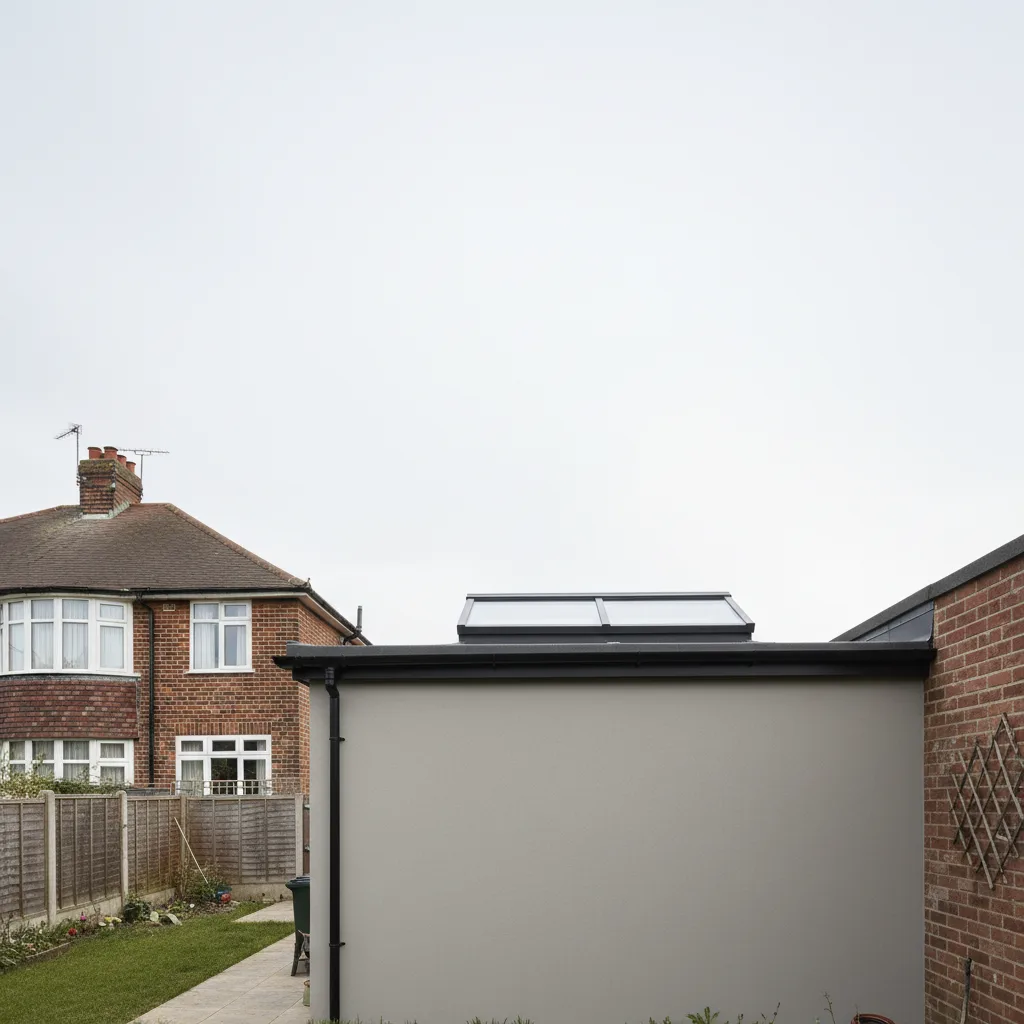
A warm edge spacer is the bar that runs around the perimeter of a double or triple glazed unit, holding the panes apart and sealing the cavity, made from a low-conductivity material instead of aluminium. Its whole job is to slow the heat leaking out at the edge of the glass, which keeps that edge warmer, cuts the condensation that forms there first, and shaves a little off the U-value of the finished rooflight.
What the spacer does inside the sealed unit
Every insulating glass unit is two or three panes with a gap between them. Something has to hold that gap open at a set width, seal the cavity so the argon or krypton fill cannot escape, and carry the desiccant that keeps the trapped air dry so the inside faces of the glass do not mist up. That something is the spacer bar. It sits hidden inside the black or grey border you can see a few millimetres in from the edge of any double glazed pane.
For decades the standard bar was hollow aluminium. It is cheap, rigid, easy to bend around a corner, and it does the mechanical job perfectly well. The trouble is thermal. Aluminium is one of the best heat conductors in common use, so the metal bar forms a bridge straight across the cavity you built specifically to stop heat crossing. All the argon fill and low-emissivity coating in the middle of the pane is working hard to insulate, and then the edge hands a shortcut to the heat you were trying to keep in.
Why an aluminium edge runs cold
Picture the glass on a cold January night. The centre of the pane, insulated by the gas-filled cavity, stays reasonably warm on the room side. The edge is a different story. Heat from indoors travels along the aluminium bar, jumps the gap it should not be able to cross, and is lost to the outside. That constant drain pulls the temperature of the inner glass down for the first 50 millimetres or so in from the frame.
Two things follow. The obvious one is heat loss, a thin strip of poor performance running right around the pane. The one people actually notice is condensation. Warm room air holds moisture, and when it touches a cold surface that moisture drops out as water. The coldest part of the whole window is that aluminium-chilled edge, so it is where the misting and the little pool of water on the frame appear first, long before the middle of the glass is cold enough to fog. On a rooflight this matters more than on a wall window, because you are often looking straight up at the glass from a kitchen or a bathroom, the two rooms in the house that throw the most moisture into the air.
What a warm edge spacer is made of
Warm edge is a category rather than one product. What the different types share is that they swap most or all of the metal for materials that conduct heat far more slowly. The common families are:
- Structural foam. A silicone or polymer foam bar, flexible and pre-desiccated, bonded to the glass with adhesive. It carries almost no metal at all, so it gives the warmest edge of the lot.
- Thermoplastic spacer. A bead of hot polymer with the desiccant mixed into it, applied by machine straight onto the glass with no rigid bar as such.
- Thin-wall stainless steel. The same box shape as the old aluminium bar, but stainless steel drawn very thin. Steel conducts far less heat than aluminium, and the thin wall gives it even less metal to conduct through.
- Polymer and hybrid bars. A plastic body, sometimes with a thin metal foil for the gas seal, which keeps the structure rigid while cutting the thermal bridge.
The figure that separates a genuine warm edge spacer from a repainted aluminium one is the linear thermal transmittance, written as the psi-value or the Greek letter psi. It describes how much heat escapes per metre of edge. A plain aluminium spacer sits high; a proper warm edge product is a fraction of that. The colour of the bar tells you nothing. A black anodised aluminium spacer looks exactly like a black foam one from across the room, so ask for the material and the psi-value, not the shade.
What difference it makes in a rooflight, and where it stops
On its own the spacer is a small part of the whole-unit U-value, but it is a real part, and it is one of the few edge details you can specify without changing anything else. Moving from an aluminium bar to a warm edge one typically improves the whole-window U-value by around 0.1 W/m²K, and lifts the temperature of the inner glass edge by a couple of degrees. That temperature lift is what buys you the drop in edge condensation, which for most people is the change they actually feel: a bathroom rooflight that no longer runs with water every morning, or a kitchen lantern whose corners stay clear.
It is worth being clear about what the spacer does not solve, because it is easy to oversell. A warm edge spacer is a winter and a condensation measure. It works on the heat leaving the room and on the cold edge. It does nothing about the sun coming in. If your problem is a south-facing rear extension baking in July, the spacer is not your answer at all; that is a job for the G-value of the glass, for solar-control coatings and orientation, which is the work we build our energy-efficient skylight installation around. The two live at opposite ends of the year. A well-specified rooflight for a south Essex home usually wants both: a warm edge and a low-emissivity coating for the winter U-value, and a solar-control glass specification for the summer gain. One is not a substitute for the other, and a supplier who talks up the warm edge spacer while staying quiet about the G-value has answered the easier half of the question.
What to ask for, and what to do next
When you read a glazing specification sheet, look for the spacer named by material, foam, thermoplastic, stainless steel or polymer, rather than described only as “warm edge”, and look for a psi-value quoted against it. Check that the whole-unit U-value on the sheet is the figure being promised, since the spacer is already baked into that number. If you are replacing a failed unit where the glass has misted internally, that edge is exactly where the old aluminium seal has usually given up first, and the replacement is the moment to move to a warm edge bar at no real change to the rest of the job.
For a new rooflight or a lantern over a kitchen, treat the warm edge spacer as the baseline you expect rather than an upgrade you pay extra to chase, and spend your real attention on the glass itself. If you want us to specify the full build-up for your roof, tell us which way it faces and the rough opening size and we will come back with the spacer, the coating and the U and G-values together. Ring 01702 898232 or request a quote, and read our skylight installation costs page if you want to know where the numbers land before you call.
Related reading
G-value explained, and why it matters more than U-value here
G-value explained, and why it matters more than U-value here. What it means in practice on Essex housing stock, and…
What is a good G-value for a skylight?
What is a good G-value for a skylight? The short answer, then the detail that actually matters.
Solar control glazing for south-facing roofs
Solar control glazing for south-facing roofs. What it means in practice on Essex housing stock, and how we approach it.
What U-value does a rooflight need for building regulations?
What U-value does a rooflight need for building regulations? The short answer, then the detail that actually matters.
Do skylights make a room too hot?
Do skylights make a room too hot? The short answer, then the detail that actually matters.
U-values, Part L and rooflight compliance
U-values, Part L and rooflight compliance. What it means in practice on Essex housing stock, and how we approach it.