How do I compare rooflight energy ratings?
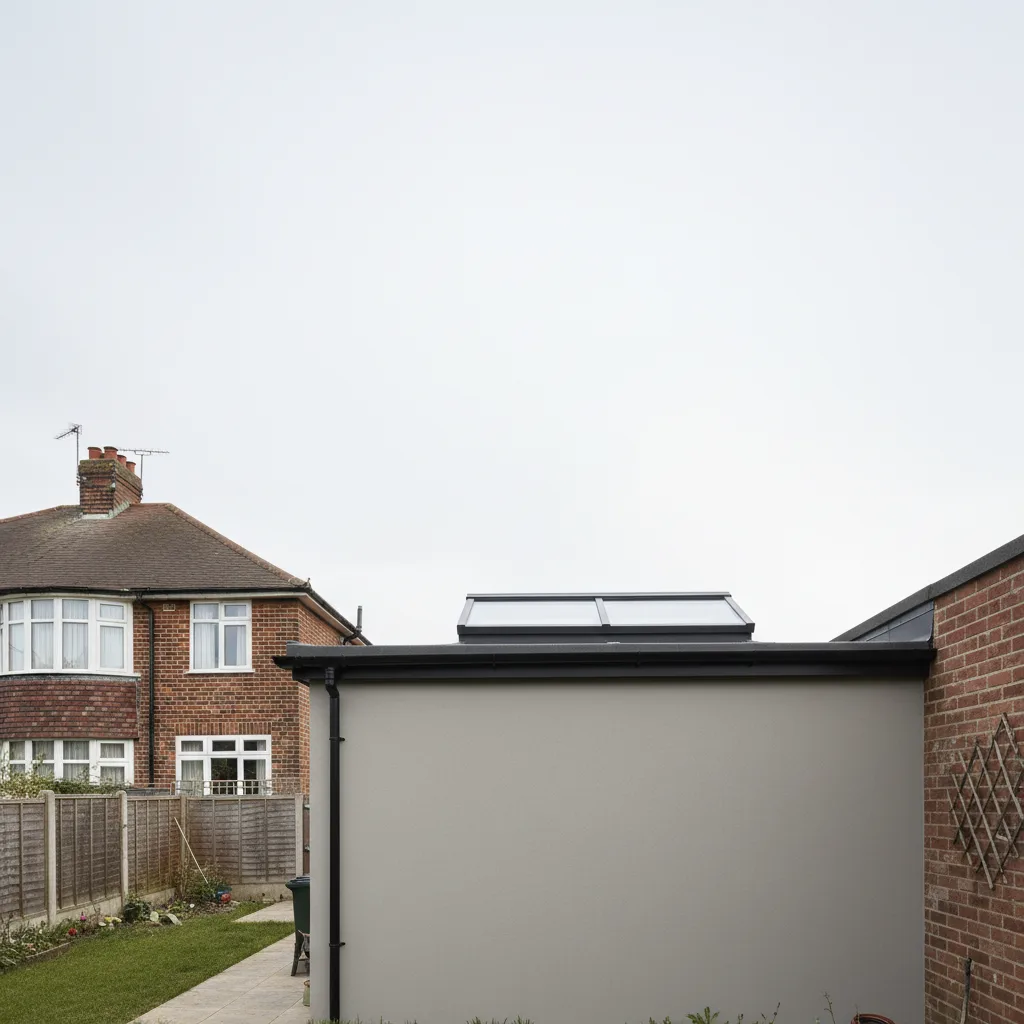
Compare rooflight energy ratings by putting three numbers side by side for each unit, measured on the same basis: the U-value for winter heat loss, the G-value for summer solar gain, and the light transmittance for daylight. A single star grade or headline rating rolls those into one figure and hides the trade-off that actually decides whether a room is comfortable, so ask for the three raw numbers and read them together rather than trusting the badge.
The three numbers every rating is built from
An energy rating for a rooflight is a summary. Underneath it sit measured values, and those are what you compare.
- U-value, in watts per square metre per degree (W/m²K). It tells you how quickly heat escapes through the unit on a cold night. Lower is better for keeping warmth in. A modern rooflight tends to fall somewhere between about 1.6 and 0.8, depending on the glass build-up, the gas fill and the frame.
- G-value, a decimal between 0 and 1. It is the share of the sun’s heat that passes through the glass into the room. Clear double glazing sits around 0.6; solar-control glass drops to roughly 0.3. Lower keeps a room cooler in summer, at the cost of some free winter warmth.
- Light transmittance, usually shown as a percentage or a decimal. This is the visible daylight that gets through. It is easy to forget, because coatings that hold heat back also dim the room, and a unit can score well on heat while letting through less light than you expected.
These pull in different directions across the seasons. A low U-value and a high G-value is the ideal for a cold north-facing room, because you keep warmth in and welcome the sun. The same combination on a south-facing extension is the recipe for an oven in July. No single letter grade can tell you which of your rooms it is describing, which is the first reason to go past the badge and read the figures.
A certified figure and a sales phrase are not the same thing
“A-rated” and “energy efficient” are marketing until you see the number and how it was reached. Two checks separate a real comparison from a misleading one.
Whole-unit against centre-pane
A value can describe the glass on its own, or the whole rooflight including its frame. Centre-pane figures cover the glass only and usually read better, because the frame is often the weaker part thermally. Whole-unit figures average the glass with the frame and give you the honest number for the thing that goes in your roof. If one quote lists a centre-pane U-value and another lists a whole-unit one, you are not comparing the same measurement, and the flattering figure will win a contest it should lose. Ask both suppliers to state which they are quoting.
Certified against declared
Some figures come from independent testing to a recognised standard, and some are the manufacturer’s own declared numbers. Both can be genuine, but a value tested and certified by a third party carries more weight than one printed on a brochure without a source. For the U-value in particular, ask what standard it was measured to and whether the certificate is available. A number with a traceable origin is one you can hold a supplier to later.
None of this means the star grade is useless. It is a quick sort. It is just too coarse to specify a rooflight for a real room facing a real direction, and it flattens the summer and winter story into one letter.
Which number matters depends on which way the roof faces
Here is where a straight ranking of ratings falls apart, and where Southend changes the answer. The city faces south across the Thames Estuary, with an open southern horizon and light bouncing back off the water, so a south-facing rear roof collects sun from mid-morning to late afternoon through the whole warm half of the year. On that roof the G-value is the number that decides comfort, and a rooflight with a brilliant U-value but a G-value of 0.6 will bake the room no matter how highly it is rated overall.
Turn the same house round and the priority flips. A north-facing pitch sees only soft, indirect light, so overheating is rarely the issue and you want the U-value low and the G-value left high to catch what winter sun there is. East and west sit in between, with west the harder case because afternoon sun lands when the building fabric has already warmed through the day. A flat roof behaves like a south-facing one whichever way the house is turned, because it points at the sky rather than at a compass bearing and takes the high summer sun almost square on.
So the right way to compare two ratings is to settle the orientation first, then decide which of the three numbers you are optimising, then rank the units on that number. A rooflight that wins for a cold north bedroom can be the wrong choice for a south-facing kitchen in the same street. Specifying the glass to the direction the roof faces, rather than to the headline grade, is the core of our energy-efficient skylight installation work, and it is why glare and solar gain, not heat loss alone, tend to be the real question on estuary-facing extensions.
Reading a window energy rating label on a rooflight
You may be shown a coloured energy rating label, the same style used for fridges and windows, with a letter grade and an arrow. It is worth understanding how that grade is built. It nets the winter heat lost through the unit against the useful solar heat gained, and rolls in the frame and the air leakage, to land on one number and a band.
That balance is calculated for a vertical window in an average orientation. A rooflight is neither vertical nor average: it faces the sky, so it gains more solar heat and, on a flat roof, sees the sun at a steeper angle than any wall window ever does. A grade worked out on the standard assumptions can flatter a unit that will overheat a horizontal opening. Treat the label as a starting point, then go back to the U-value, the G-value and the light transmittance for the orientation you actually have. If the label credits solar gain as a plus and your roof faces south, read that credit as a warning rather than a bonus.
What to do before you accept a quote
Put the numbers in a row before anyone talks you into a grade. For each unit you are offered, write down the U-value, the G-value and the light transmittance, note whether each is whole-unit or centre-pane, and ask which are certified. If a supplier can only give you a letter and a phrase, that is your answer about how carefully the glass has been chosen.
Then match the row to the room. Stand under the roof, note the direction it faces and whether it is pitched or flat, and decide which number is doing the work: G-value for anything facing south or lying flat, U-value for the cold north rooms. Compare like for like on that number and the rest of the specification follows. It is also worth remembering that a new or enlarged rooflight is notifiable under Building Regulations, with Part L setting a ceiling on the U-value, so the winter figure has a legal floor to clear while the summer G-value is left entirely to you.
If you would rather hand that over, tell us the orientation and the rough opening size and we will come back with a specification and the figures behind it. Ring 01702 898232 or request a quote, and have a look at our skylight installation costs if you want a sense of where solar-control glass sits against a clear unit before we speak.
Related reading
G-value explained, and why it matters more than U-value here
G-value explained, and why it matters more than U-value here. What it means in practice on Essex housing stock, and…
What is a good G-value for a skylight?
What is a good G-value for a skylight? The short answer, then the detail that actually matters.
Solar control glazing for south-facing roofs
Solar control glazing for south-facing roofs. What it means in practice on Essex housing stock, and how we approach it.
What U-value does a rooflight need for building regulations?
What U-value does a rooflight need for building regulations? The short answer, then the detail that actually matters.
Do skylights make a room too hot?
Do skylights make a room too hot? The short answer, then the detail that actually matters.
U-values, Part L and rooflight compliance
U-values, Part L and rooflight compliance. What it means in practice on Essex housing stock, and how we approach it.