Triple glazing in a rooflight: when it is worth it
Triple glazing in a rooflight: when it is worth it. What it means in practice on Essex housing stock, and how we approach it.
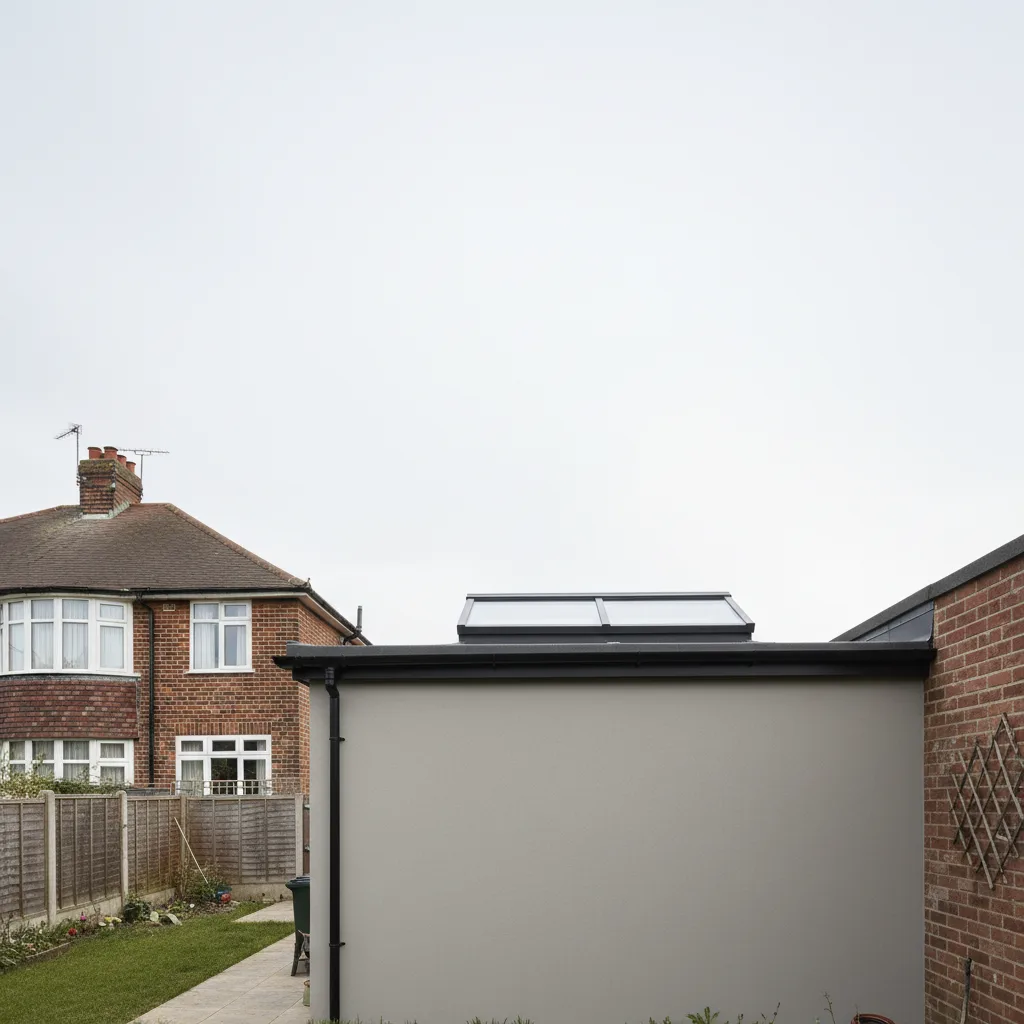
A third pane sounds like a straight upgrade, and in a wall window it usually is. Overhead, the maths changes. A triple-glazed rooflight is heavier, thicker and dearer, it holds warmth in far better on a cold night, and it does almost nothing for the problem most people actually notice on a Southend roof, which is a room that overheats on a bright afternoon. Whether the third pane is money well spent comes down to which way the glass points and what you are trying to solve.
What the third pane actually adds
Double glazing is two panes with one gas-filled cavity between them. Triple glazing is three panes and two cavities. Each cavity is usually filled with argon, sometimes krypton on the premium units, and there are typically two low-emissivity coatings rather than one. The extra cavity is the point: it is a second layer of trapped gas that heat has to cross before it can escape, and it roughly doubles the number of insulating barriers between your ceiling and the sky.
The headline this buys you is a lower U-value. A decent double-glazed rooflight sits around 1.2 to 1.3 W/m²K. A good triple lands between 0.8 and 0.6, and the very best krypton-filled units for low-energy builds go lower still. That is a meaningful step. Winter heat loss through the glass falls by something close to a third when you move from a middling double to a strong triple.
None of that is free. The second cavity and the third pane make the sealed unit heavier and thicker, which matters more on a roof than on a wall, and they add cost. They also change the way the glass behaves on the outside face on a cold morning in ways that surprise people. Each of those trade-offs decides whether triple is right for a given rooflight, so they are worth taking one at a time.
The winter case: where a third pane earns its keep
Triple glazing is a winter product. Its whole argument is heat retention, and there are rooms where that argument is strong.
The first is comfort at the glass itself. A cold inner pane radiates the heat off your body towards it, which is why sitting under a single-glazed roof in January feels draughty even when the air is warm. The warmer the inner pane runs, the less of that cold-surface effect you get. A triple unit keeps its inner face several degrees warmer than a double on a hard frost, so the space directly under a large rooflight stays usable when the temperature drops. Under a kitchen lantern with a table below it, or a loft bedroom with the bed near the glass, that difference is one you feel.
The second is condensation on the inside. Water forms on the inner pane when its surface falls below the dew point of the room air. Kitchens and bathrooms throw off a lot of moisture, and a rooflight is the coldest surface in the ceiling, so it is where that moisture lands first. A warmer inner pane resists it. If you have watched a double-glazed skylight stream on a cold morning over a shower or a hob, a triple unit answers the glass side of that problem, alongside proper ventilation.
The third is simply a cold room. Rooms on the north side of the house, rooms with a lot of glass relative to their floor area, and rooms in genuinely low-energy homes where every other element of the fabric is already performing. If you have insulated the walls and the roof to a high standard, a 1.2 W/m²K rooflight becomes the weak point in the ceiling, and pulling it down to 0.8 keeps the whole assembly consistent. On a Passivhaus or a deep retrofit the third pane is not optional, it is part of the design.
The summer trap: triple glazing is not a solar-gain answer
Here is where people spend money in the wrong place. A room that cooks between two and six on a July afternoon feels like a glazing problem, and a triple-glazed unit is the most expensive glass on the shelf, so it looks like the answer. It is not.
Summer heat through a rooflight arrives mostly as radiation, the sun’s energy passing straight through the glass, and the number that governs it is the G-value, not the U-value. The U-value describes conducted heat, which on a hot day is a small share of the total. Adding a third pane improves the U-value and barely touches the radiated load. You can fit the best triple unit made and still have a room that is unbearable at teatime, because the sun is coming through the glass, not conducting through it.
It gets worse than neutral. A plain triple unit with three clear panes actually has a G-value of around 0.5, a little lower than clear double at 0.6, because each additional pane reflects and absorbs a bit more light. That sounds helpful for summer, but it cuts the useful winter solar gain by the same mechanism, and a drop from 0.6 to 0.5 is nowhere near enough to settle an overheating room. To control summer heat you need a solar-control coating, and that coating does the heavy lifting on a double-glazed unit for a fraction of the weight and cost of going triple. The right tool for an overheating south-facing extension is solar-control glazing, chosen for its G-value, not a third pane chosen for its U-value.
You can, of course, have both. Solar-control triple units exist, with the coating on the outer pane and the insulation from the two cavities behind it. They are the specification for a large south-facing rooflight on a low-energy build, where you want the winter U-value and the summer G-value at once. But for most homes the coating on a double does the job that matters, and the third pane is answering a question the room was not asking.
Weight, thickness and the structure underneath
This is the part that catches people out, because it does not exist for a wall window. Glass is heavy, and a rooflight has to carry its own weight downwards through the frame and the upstand into the roof structure, not sideways into a wall.
A third pane adds roughly half again to the weight of the sealed unit. A double-glazed unit over a large lantern might weigh a certain amount per square metre; the triple equivalent is markedly heavier, and on a big glazed area that adds up to a serious load. For a modest rooflight it is neither here nor there. For a 2.5 metre lantern over a knocked-through kitchen it can be the difference between a straightforward install and one that needs the timber below it checking, and possibly upgrading, before anything goes on the roof.
Thickness matters too. A double unit is usually around 28mm from face to face. A triple can be 44mm or more. The frame has to be built to take it, the upstand detail has to suit it, and on a replacement you cannot always drop a triple unit into a frame designed for a double. If a rooflight is being swapped and the frame is staying, the glass thickness has to be checked against what the existing profile can hold.
On a roof lantern with slim sightlines, the extra glass weight also loads the bars and corner joints. Manufacturers rate their systems for a maximum pane weight, and a large triple-glazed lantern can push towards that limit. It is a specification question that has to be settled on paper before the order goes in, which is a normal part of surveying a large glazed roof rather than a reason to avoid triple.

External condensation and other quirks
A well-insulating triple unit can show condensation on its outside face on a clear, still morning, and the first time it happens people assume the glass has failed. It has not. It is a sign the unit is working.
Because so little heat escapes through a good triple unit, the outer pane stays cold. On a clear night the sky draws heat off that outer surface by radiation and its temperature can fall below the dew point of the outdoor air, so dew forms on the glass exactly as it does on a car windscreen or a garden lawn. It clears as the sun comes up. A poorly insulating unit leaks enough warmth to keep its outer pane above dew point, so it stays clear, which is the opposite of a virtue. External condensation is a feature of high performance, not a fault, but it is worth knowing about before it appears over the kitchen.
Two smaller points sit alongside it. Triple units can offer a modest acoustic gain, particularly if the three panes are different thicknesses, which shifts the frequency at which sound passes through. And the extra pane very slightly reduces visible light transmittance, so a triple rooflight is a touch less bright than a double of the same size. Neither is a dealbreaker, but both belong in the decision.
Double versus triple, side by side
These are typical published figures for common rooflight build-ups. Exact numbers vary by manufacturer, coating and whether the value is quoted centre-pane or whole-unit, so read them as the shape of the market rather than a rigid spec sheet.
| Build-up | U-value (W/m²K) | G-value | Rough weight | Price vs base double | Best for |
|---|---|---|---|---|---|
| Double, argon, single low-E, clear | 1.3 | 0.60 | Base | Base | North planes, cold rooms wanting free heat |
| Double, argon, solar-control coating | 1.2 | 0.30 | About the same | Plus 10 to 20% | South and west planes, overheating extensions |
| Triple, argon, two low-E, clear | 0.8 | 0.50 | Around 50% heavier | Plus 25 to 45% | North planes on low-energy builds, very cold rooms |
| Triple, argon, solar-control outer pane | 0.7 | 0.26 | Around 50% heavier | Plus 40 to 60% | Large south rooflights on Passivhaus and deep retrofit |
| Triple, krypton, high performance | 0.6 | 0.50 | Heaviest | Plus 50 to 70% | Certified low-energy builds where fabric targets are strict |
Read the U-value column and triple clearly wins, dropping from 1.3 to 0.6. Read the G-value column and the story is different: the thing that controls summer heat is the coating, not the pane count. The solar-control double at 0.30 beats the clear triple at 0.50 for keeping a room cool, at a fraction of the weight and cost. The two questions, winter loss and summer gain, are answered by two different columns, and only one of them is the U-value that triple glazing improves.
When it is worth it, and when a good double wins
Put the trade-offs together and a fairly clear rule falls out.
Triple glazing is worth it when:
- The room is on the north side, or otherwise cold, and you want to hold warmth in rather than control summer sun.
- You are building or retrofitting to a genuine low-energy standard, where the rest of the fabric already outperforms a double-glazed rooflight and the glass would be the weak link.
- The room throws off a lot of moisture and you are fighting condensation on the inner pane, in a kitchen or bathroom used hard through the winter.
- Someone sits or sleeps directly under a large area of glass and feels the cold-surface radiation from a double unit on a frosty night.
- You want a south-facing rooflight to do both jobs at once, in which case a solar-control triple is the specification, not a clear one.
A well-chosen double is the better buy when:
- The real complaint is summer overheating on a south or west plane. Spend the money on the solar-control coating and the G-value, not on a third pane.
- The rooflight is large and the structure below it is marginal, where the extra weight forces work that the thermal gain does not justify.
- You are replacing glass in an existing frame that will not physically take a 44mm unit.
- The room is used briefly, like a landing, hallway or utility, where a lower U-value never pays back.
- The budget is tight and the plane faces north, where a clear double already gives you brightness and reasonable retention.
Whatever the glass does, an opening rooflight still earns its place. The fastest way to clear stratified hot air is to let it out at the top of the room, which is why an electric opening unit on a high ceiling does work that no pane count can. Glass controls what comes through. Ventilation controls what leaves.
Triple glazing on a south Essex roof: what to weigh up
The housing here shapes the answer. South Essex has an enormous stock of 1930s semis, and the classic project on one of them is a rear extension over a knocked-through kitchen with a lantern or a run of flat rooflights in the roof. Those extensions usually face the garden, and across this stretch of coast the garden, and the roof over it, faces south towards the Thames Estuary. That aspect is the whole reason this business specifies glass before it specifies a unit: an open south horizon with reflected light off the water is a lot of solar energy landing on a lot of glass.
On that south-facing extension, triple glazing is the wrong first move if the brief is comfort in summer. The coating and the G-value settle the overheating; the third pane does not. Where triple earns a place on those roofs is the winter side of the same room, or the north-facing plane of a pitched-roof conversion where warmth retention beats solar gain. In the older stock, the Victorian and Edwardian terraces and villas along the cliff, a loft conversion often puts glass into a slope with no shading above it, and there the orientation of that exact slope decides whether you are buying a third pane for warmth or a solar-control coating for shade. On a house with planes facing more than one way, the two rooflights will not carry the same glass.
Settle it in one conversation with whoever is quoting. Ask which way the plane faces, because orientation comes before product. Ask for the U-value and whether it is centre-pane or whole-unit, since whole-unit is the honest figure. Ask for the G-value in the same breath, because a low U-value tells you nothing about summer. Ask whether the structure below a large unit has been checked for the extra weight of triple. And ask for the manufacturer’s glass data sheet, which every maker publishes with values calculated to the relevant standards. New and enlarged rooflights are notifiable under Building Regulations, and that notification to Southend-on-Sea City Council, or the relevant local authority for your address, is made on your behalf as part of the job.
Skylights and rooflights have been going onto south Essex roofs from this business for over fifteen years, every installation backed by a ten-year workmanship guarantee, and the survey always starts with the compass. If you want to know whether the third pane is worth it on your particular roof, ask for a specification with the U-value and the G-value written down for each plane, and let the numbers decide it.
Related reading
G-value explained, and why it matters more than U-value here
G-value explained, and why it matters more than U-value here. What it means in practice on Essex housing stock, and…
What is a good G-value for a skylight?
What is a good G-value for a skylight? The short answer, then the detail that actually matters.
Solar control glazing for south-facing roofs
Solar control glazing for south-facing roofs. What it means in practice on Essex housing stock, and how we approach it.
What U-value does a rooflight need for building regulations?
What U-value does a rooflight need for building regulations? The short answer, then the detail that actually matters.
Do skylights make a room too hot?
Do skylights make a room too hot? The short answer, then the detail that actually matters.
U-values, Part L and rooflight compliance
U-values, Part L and rooflight compliance. What it means in practice on Essex housing stock, and how we approach it.