What is the best glass for a south-facing rooflight?
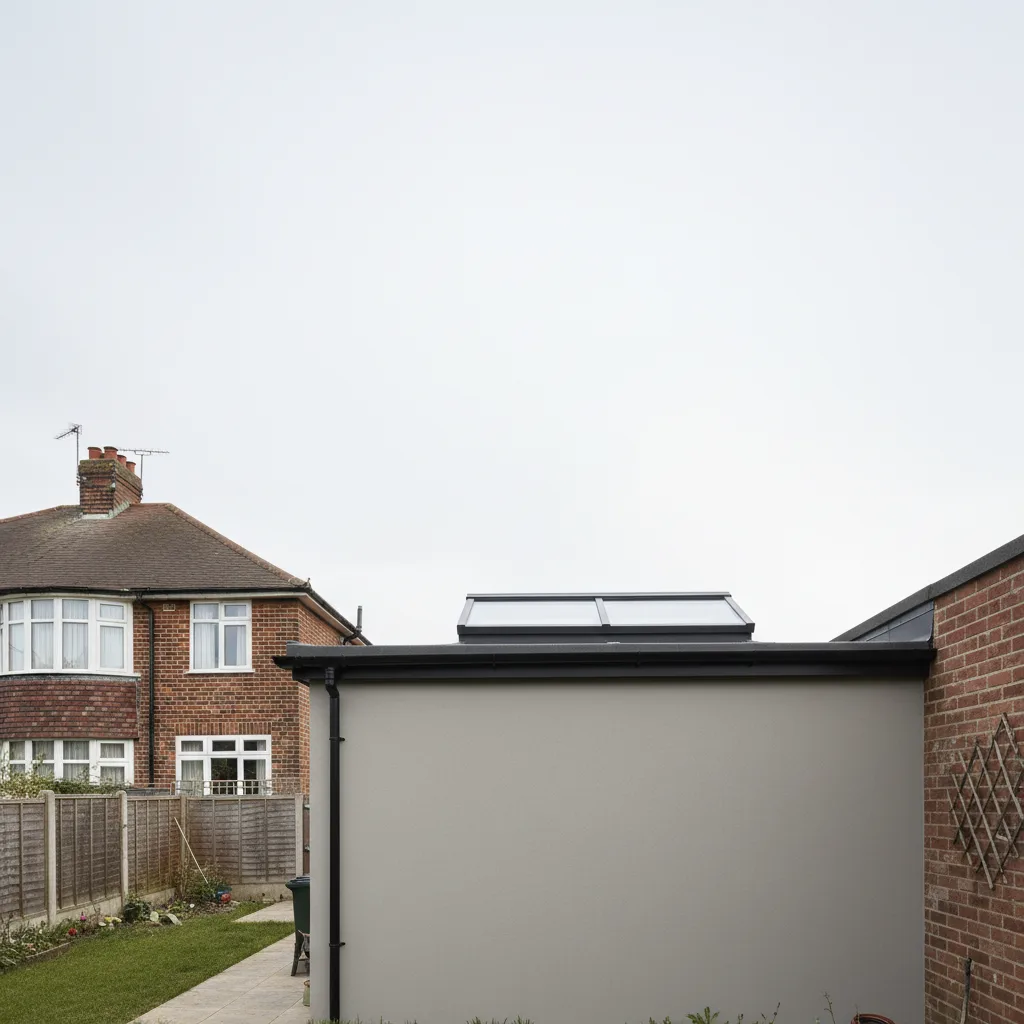
The best glass for a south-facing rooflight is a double or triple glazed unit with a solar-control coating, a G-value around 0.3 or lower, and a laminated inner pane for safety overhead. The coating on the outer pane is doing most of the work, so specify that first and treat the number of panes and the gas fill as secondary. Get the coating right and a south-facing room stays usable through July; get it wrong and no amount of blinds will rescue it.
The build-up that suits a roof pointing at the sun
A sealed glazing unit for a rooflight is a stack of parts, and each one earns its place. Working from outside in, a south-facing specification wants: an outer pane carrying the solar-control coating, a cavity filled with argon rather than plain air, a warm-edge spacer bar around the perimeter, and a laminated inner pane facing the room. On a triple unit you add a middle pane and a second cavity, which helps the winter U-value more than it helps the summer heat.
The reason the coating goes on the outer pane, on its inner face where the cavity protects it, is that heat is easier to reject before it crosses the gap than after. Once solar energy has been absorbed by the inner glass it radiates into the room whether you like it or not. A coating positioned early in the stack turns much of that energy away while it can still be shed back to the sky. This is the single decision that separates a rooflight you can sit under in summer from one you cannot.
Argon in the cavity and a warm-edge spacer are worth having, but be honest about what they do. They cut the U-value, which is a winter and night-time property, the rate at which warmth escapes upwards when it is cold. They do almost nothing for the midsummer problem, which is the sun pouring in during the day. On a south-facing roof you are buying the coating for July and the argon for January, and both belong in the same unit.
Coatings and body tints: what actually turns the heat away
There are two families of glass that reduce solar gain, and good south-facing units often combine them.
The first is a body tint, where the glass itself is coloured through its whole thickness with a bronze, grey, green or blue cast. Tinted glass absorbs a share of the sun’s energy in the pane. It is cheap and reliable, but because the absorbed heat warms the glass, some of it still finds its way inwards, so a tint on its own is a partial answer.
The second is a solar-control coating, a microscopically thin metallic layer applied to the glass surface. A good sputtered, or offline, coating reflects and rejects infrared heat while letting a fair amount of visible daylight through. This is the part that lets a modern unit sit near a G-value of 0.3 without the room going gloomy. Many solar-control coatings are also low-emissivity, meaning the same layer that turns away summer heat also holds winter warmth in, so you are not paying twice.
Ask which coating is on the glass and whether it is combined with a tint. A neutral, barely-there coating reads best from inside and from the garden looking up. A heavier tint blocks more but colours the light and is more obvious across a large lantern where you take in several panes at once. For the physics behind the target figure, our guide to a good G-value for a skylight sets out where to land by orientation.
Toughened, laminated and the rules for glass overhead
Glass in a roof has a rule that vertical glass does not: if it can break and fall, it has to be specified so that it stays put or falls safely. Part K of the Building Regulations covers this, and it steers overhead glazing towards a laminated inner pane. Laminated glass is two sheets bonded to a clear plastic interlayer, so if it cracks the fragments hold to the interlayer instead of dropping into the room below.
A common and sensible south-facing make-up is a toughened outer pane carrying the solar-control coating, over a laminated inner pane facing the room. The toughened outer resists thermal stress from the sun beating on a coated, partly absorbing surface, which matters more on a south roof than anywhere else because the temperature swings across that pane are larger. The laminated inner satisfies the overhead safety requirement. The interlayer brings a bonus too: it filters out nearly all ultraviolet, which is the part of sunlight that fades a sofa or a wooden floor over the years.
You do not need to memorise the standards, but you should expect any quote for a south-facing rooflight to include a laminated pane on the room side as a matter of course. If it does not, ask why. New and enlarged rooflights are notifiable work, and we make the Building Control notification to Southend-on-Sea City Council or your local authority on your behalf, so the safety glazing is our responsibility to get right, not yours.
Keeping the daylight while losing the heat
The fear with solar-control glass is that a room fitted for shade will feel dim. It is a fair worry and it has a number attached, so you can check it rather than guess. Alongside the G-value, every glass specification carries a light transmittance figure, the percentage of visible daylight the unit lets through. Clear double glazing sits around 70 to 80 per cent. A strong solar-control unit might sit nearer 50 to 60 per cent. That is still a bright room; it is not a tinted car window.
The trick is to read both numbers together and pick a glass with a high light transmittance for its G-value, which is exactly what a good neutral coating gives you and a heavy tint does not. There is even a selectivity ratio some manufacturers publish that divides one by the other. You do not need the jargon, only the habit of asking for both figures on the same sheet and comparing units on daylight as well as heat.
Glare is a separate matter from heat, and worth naming here because Southend faces south across the Thames Estuary, so a south-facing rear room takes direct sun for most of the day and reflected light off the water on top of it. Solar-control glass softens glare a little by cutting the overall light, but it does not aim it away. If low winter sun straight into your eyes is the problem, a blind or external shade solves that better than the glass does, and the two work well side by side.
What to ask for, and what to do next
Before anyone quotes you, decide the make-up you are looking for so you can judge what comes back. For a south-facing rooflight over a room you actually use, that is a solar-control coated, argon-filled double or triple unit, G-value around 0.3 or below, light transmittance you are happy with, and a laminated pane on the room side. On a flat roof or a lantern, hold that line firmly, because horizontal glass sees the high summer sun almost square on and cannot lean on orientation to save it.
Ask for the glass specification sheet, not a description. The phrase “solar control” gets printed on units that barely earn it, so make the supplier show you the G-value, the light transmittance and the U-value for the same build-up, and confirm the inner pane is laminated. If a rooflight over a hot south-facing room is being replaced, that swap is your chance to get the glass right, since the opening is already there and the only real choice left is what goes into it.
Specifying glass by orientation, rather than selling you whatever unit is on the shelf, is the whole basis of our energy-efficient skylight installation work, and it runs right through how we handle flat roof skylight installations where the sun sits overhead. Tell us which way the roof faces and the rough opening size, and we will come back with a glass specification and a price. Ring 01702 898232 or request a quote, and we will work out the glass for the light you are trying to live under.
Related reading
G-value explained, and why it matters more than U-value here
G-value explained, and why it matters more than U-value here. What it means in practice on Essex housing stock, and…
What is a good G-value for a skylight?
What is a good G-value for a skylight? The short answer, then the detail that actually matters.
Solar control glazing for south-facing roofs
Solar control glazing for south-facing roofs. What it means in practice on Essex housing stock, and how we approach it.
What U-value does a rooflight need for building regulations?
What U-value does a rooflight need for building regulations? The short answer, then the detail that actually matters.
Do skylights make a room too hot?
Do skylights make a room too hot? The short answer, then the detail that actually matters.
U-values, Part L and rooflight compliance
U-values, Part L and rooflight compliance. What it means in practice on Essex housing stock, and how we approach it.